

A student gets stuck on a math problem at 8 p.m., just two days before a unit test. The real question is not simply who can explain the answer. It is whether that student can revisit the concept, practice similar questions, clear the next doubt, and walk into the test with confidence. That is where the choice between CBSE tuition versus home tutoring becomes meaningful for families.
Both options can help students improve. The better fit depends on a child’s learning habits, the family’s schedule, the level of academic support needed, and whether the goal is basic improvement or a disciplined path toward 90+ scores. For CBSE students in grades 6-12, especially in mathematics and science, the strongest support is usually the one that combines clear teaching with regular practice, revision, and visible progress.
CBSE Tuition Versus Home Tutoring: The Core Difference
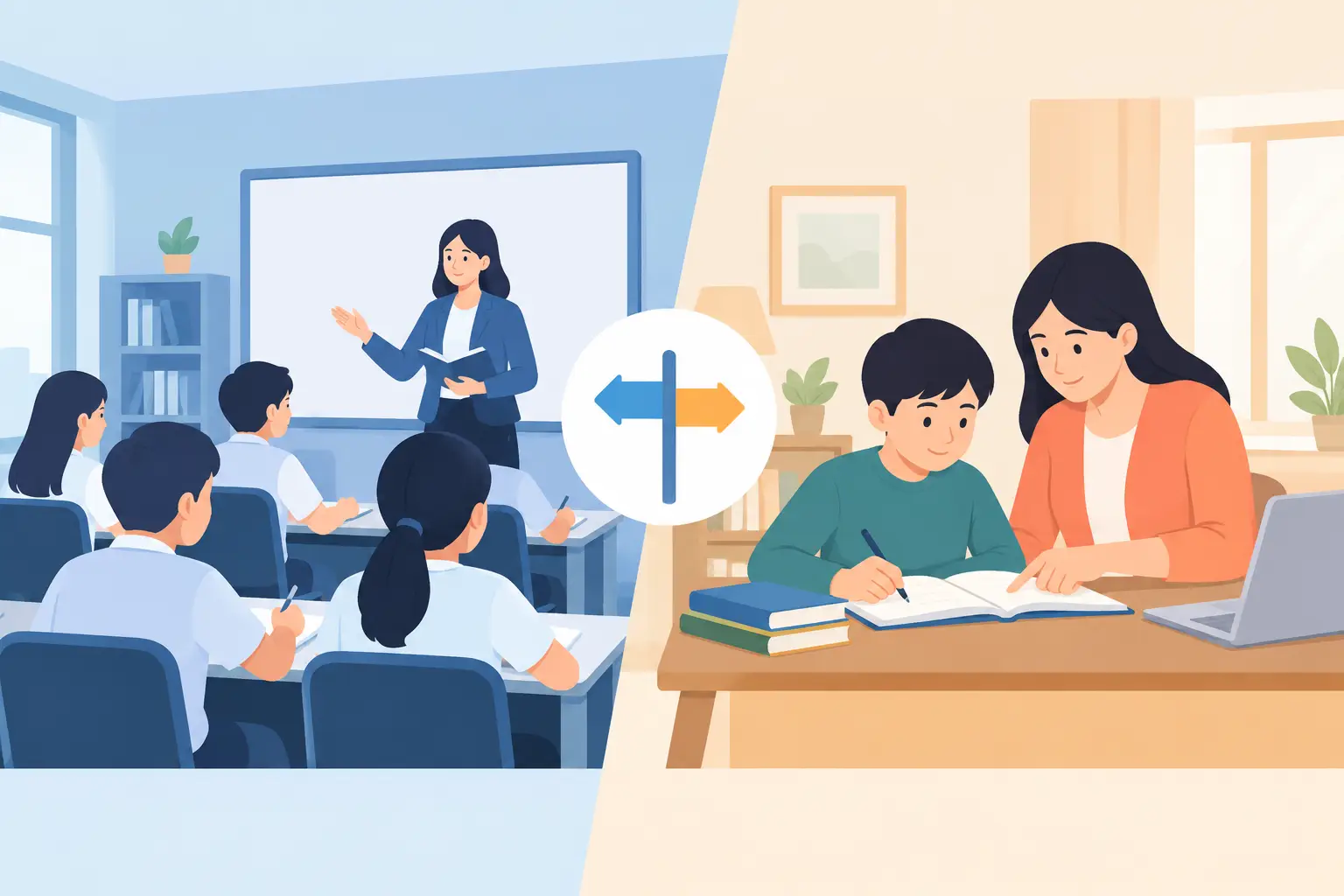
Traditional CBSE tuition is often delivered through a coaching center or an online academic program. It usually follows a planned course schedule, covers textbook chapters in sequence, and includes tests or assignments. A home tutor, on the other hand, teaches a student one-to-one at home or sometimes online, often tailoring each session to immediate schoolwork and weak areas.
The difference is not just group learning versus individual learning. It is structure versus flexibility, repeatable resources versus live-only explanation, and broader academic systems versus a tutor’s personal method. A good home tutor can create a highly supportive environment. A well-designed CBSE tuition program can create consistency across the entire school year.
For parents, the decision becomes easier when they stop asking, “Which option is better?” and start asking, “What does my child need every week to perform better?”
When Home Tutoring Can Be the Right Choice
Home tutoring works especially well when a student needs close personal attention at a particular moment. Perhaps the student has missed school due to travel or illness, is struggling with one difficult chapter, or feels too hesitant to ask questions in front of others. In these cases, a tutor can slow down, change the explanation, and focus fully on the child’s pace.
It can also be reassuring for parents who want a familiar person present in the home. There is no commute to a tuition center, and schedules may be adjusted around school activities. For younger students or children who need help developing basic study discipline, that personal presence can be valuable.
However, home tutoring has limits that families should consider honestly. Learning quality can vary greatly from one tutor to another. Some tutors are excellent at explaining but may not provide chapter-wise notes, regular model papers, mock exams, or a clear revision plan. If a session is missed, there may be no recorded lesson to replay. Progress also depends heavily on whether the tutor has a consistent system for testing and tracking performance.
Home tutoring may be a strong short-term answer, but it is not automatically a complete academic plan.
Where Structured CBSE Tuition Has an Advantage
CBSE assessments reward more than memorizing one chapter the night before an exam. Students need conceptual clarity, steady revision, answer-writing practice, and familiarity with question patterns. Structured tuition is designed to build these habits over time.
A syllabus-aligned program helps ensure that learning follows the school calendar rather than becoming a last-minute response to low marks. Students can move from an animated explanation of a science concept to guided practice questions, notes, home tests, and mock exams. That sequence matters. Watching a lesson may create understanding, but practice reveals whether the student can apply that understanding independently.
Digital CBSE tuition also offers a practical benefit for busy families: replay. A child who did not fully understand algebra during a live class does not have to wait for the next tutoring session. They can revisit the explanation, pause at a difficult step, and try again. This is particularly useful for students who need more than one explanation before a concept settles.
For expatriate families, this model can be even more helpful. Parents may be managing work schedules, relocation, and school transitions while trying to maintain continuity with the CBSE curriculum. App-based tuition reduces dependence on a nearby center or a tutor whose availability may change. Learning can continue from home, during travel, or around family routines.
The Questions Parents Should Ask Before Choosing
The best decision is rarely based on cost alone or on the promise of individual attention. Parents should look at the full learning experience. A useful option should answer these questions clearly:
- Does it follow the student’s CBSE syllabus and current grade level?
- Can the child practice regularly and receive feedback beyond a verbal explanation?
- Is there a simple way to revisit missed lessons or difficult concepts?
- Will parents be able to see whether the child is improving over time?
- Does the support include exam preparation, not just homework completion?
If the answer is no to most of these questions, the student may receive help without gaining a reliable study system. That can lead to the same pattern each term: panic before exams, rushed revision, and frustration over marks that do not reflect the child’s potential.
Personalized Does Not Have to Mean One Tutor
Many parents hear “personalized learning” and immediately think of a one-to-one home tutor. Personal attention is valuable, but personalization can come from several parts of a learning model.
A student may need to replay a video lesson three times, complete extra practice on fractions, attend a live class for questions, and raise a doubt ticket after attempting homework. Another student may understand the chapter quickly but need timed mock tests to improve exam performance. Both are receiving support based on what they need, even if they are not sitting beside the same tutor every day.
This is where a structured digital program can support different learning speeds without making a child feel left behind. The student can learn independently between classes while still having access to teacher guidance and academic support. Parents gain greater visibility, and students gain ownership of their progress.
At OurOwn, this approach is built around chapter-based CBSE learning, combining live classes with reusable video lessons, notes, practice questions, home tests, mock exams, and doubt support. The goal is not to add more screen time. It is to make study time more focused, repeatable, and connected to better performance.
The Real Trade-Off: Convenience Versus Consistency
Home tutoring may feel more convenient because the tutor comes to the student. Yet convenience is not only about location. It is also about access to learning when the student is ready to study, the ability to repeat a lesson, and the freedom to maintain a routine despite changing schedules.
A tuition center can provide structure, but commuting may consume time and energy. A home tutor saves travel but may be unavailable during exams, vacations, or schedule changes. Online CBSE tuition can reduce these friction points, provided it includes active learning features rather than only recorded videos.
Students still need discipline in any format. A digital course cannot improve marks if lessons are ignored, and a home tutor cannot build confidence if the student never practices alone. The most successful families create a simple weekly rhythm: attend classes, review notes, complete practice, ask doubts early, and take tests seriously. That routine turns tuition into progress.
Choosing for the Student You Have Now
Choose home tutoring when your child needs intensive one-to-one help, has a specific learning barrier, or responds best to direct personal guidance. It can be especially effective as targeted support alongside school learning.
Choose structured CBSE tuition when your child needs an organized academic plan across subjects and chapters, regular practice, accessible revision materials, and exam-focused accountability. It is often the stronger long-term choice for students aiming to improve steadily rather than relying on last-minute help.
Some families may even combine the two for a short period. A student can follow a structured CBSE program for daily learning and use occasional home tutoring for a stubborn topic or special exam concern. The key is to avoid paying for duplicate explanations without a clear plan.
The right support should leave a student feeling calmer before a test, clearer about what to study next, and more capable of solving problems independently. When learning becomes a daily habit instead of an exam-season emergency, stronger marks have room to follow.