Generative AI  /  Beginner to Mastery

Mastering in Data Science &

Generative AI

Course Duration

650 Hours


Course Material

Live. Online. Interactive.

Expert instruction from industry professionals.

Career-focused curriculum aligned with top employer demands.

Flexible learning paths tailored to individual career goals.

Networking opportunities with peers and industry experts.

KEY HIGHLIGHTS OF MASTERING IN DATA SCIENCE & GENERATIVE AI PROGRAM

1) Weekly sessions with industry professionals

2) Dedicated Learning Management Team

3) 650 hours of hands-on learning experience

4) Over 240 hours live sessions spread across 11 months

5) 240 hours of self-paced Learning

6) Learn from IIT Faculty & Industry experts

🔺More than 50+ industry-related projects and case studies

🔺24*7 Support

🔺1:1 Mock Interview

🔺Designed for both working professionals and fresh graduates

🔺Competitive Edge and Innovation

🔺 Personalised mentorship sessions with industry experts

🔺Dedicated Learning Management Team

🔺No-Cost EMI Option

🔺High Demand and Career Opportunities

🔺Problem-Solving and Critical Thinking

WHY JOIN MASTERING IN DATA SCIENCE & GENERATIVE AI PROGRAM?

Hands-On Learning

Acquire practical experience with industry-standard tools and real-world applications.

In-Demand Skills

Gain expertise in data science, machine learning, and AI, with a focus on both foundational and cutting-edge technologies.

Expert Instruction

Learn from industry professionals with real-world experience.


Career Advancement

Boost your career prospects with a curriculum tailored to meet the demands of top employers.

Mastering in Data Science & Generative AI OVERVIEW

This Program offers a blend of theory and practice for future data scientists and AI professionals. This Program spans fundamental data science skills, advanced machine learning including Gen AI using methods like GANs, VAEs, LLMs, MidJourney, and LangChain. With a combination of hands-on projects and case studies, the program introduces all its learners to computer science in collaboration with mathematics and ethics thereby transforming them into leaders positions within technology-sector business or research.

ENROLL NOW, BOOK YOUR SEAT & AVAIL UPTO 30% FEE WAIVER

Mastering in Data Science & Generative AI Objectives

This course is to equip students with a deep understanding of the foundational and advanced concepts in data science and artificial intelligence. This course teaches programming languages such as Python and R, statistical analysis, machine learning techniques by making you an expert in specialized domains like computer vision, NLP, Deep Learning among others. Courses include practical training with tools such as SQL, Tableau, Power BI and Advanced Excel to help learn how to handle, analyze and visualize the data. The course provides a view of the most advanced Generative AI technologies, creating students capable of innovating in technology that is here for future human progression at an increasing rate. Ultimately, the course aims to prepare graduates for leadership roles in data science and AI, enabling them to drive data-driven decision-making and innovation in various industries.

Why Learn Mastering in Data Science & Generative AI ?

Comprehensive Skill Development

Gain expertise in data science and AI, from foundational concepts to advanced techniques like deep learning, computer vision, and NLP.

Cutting-Edge Technology

Learn the latest in Generative AI, a rapidly growing field that drives innovation in various industries.

Practical Application

Develop hands-on experience with essential tools such as Python, R, SQL, Tableau, and Power BI, ensuring you’re ready for real-world challenges.

Career Advancement

Prepare for leadership roles in data science and AI, with a curriculum designed to meet the demands of top employers.

Interdisciplinary Approach

Benefit from a holistic program that integrates statistics, programming, machine learning, and advanced AI, making you a versatile and in-demand professional.

Industry-Relevant Training

Stay ahead of the curve with a course designed to address the latest trends and needs in the data science and AI landscape.

Global Opportunities

Open doors to international career paths by mastering skills that are in demand across industries and geographies.

Capstone Projects & Real Case Studies

Work on industry-based projects and case studies that help bridge the gap between theoretical knowledge and real-world problem-solving.

Program Advantages

✅ Expert-led instruction from industry professionals with real-world experience in data science, and AI.

✅ Learn from experienced instructors with deep industry expertise.

✅ Hands-on learning through practical projects and case studies using industry-standard tools like Tableau, Power BI, and Advanced Excel.

✅ Interdisciplinary approach that integrates statistics, programming, and AI for a well-rounded understanding of data science principles.

✅ Comprehensive curriculum covering key areas of data science and AI, including machine learning, deep learning, NLP, computer vision, and generative AI.

✅ Engage in practical exercises and real-world case studies to apply concepts effectively.

✅ Career-focused outcomes with skills aligned to meet the demands of top employers, enhancing your job prospects.

✅ Real-world applications, preparing you to solve complex challenges in various industries.

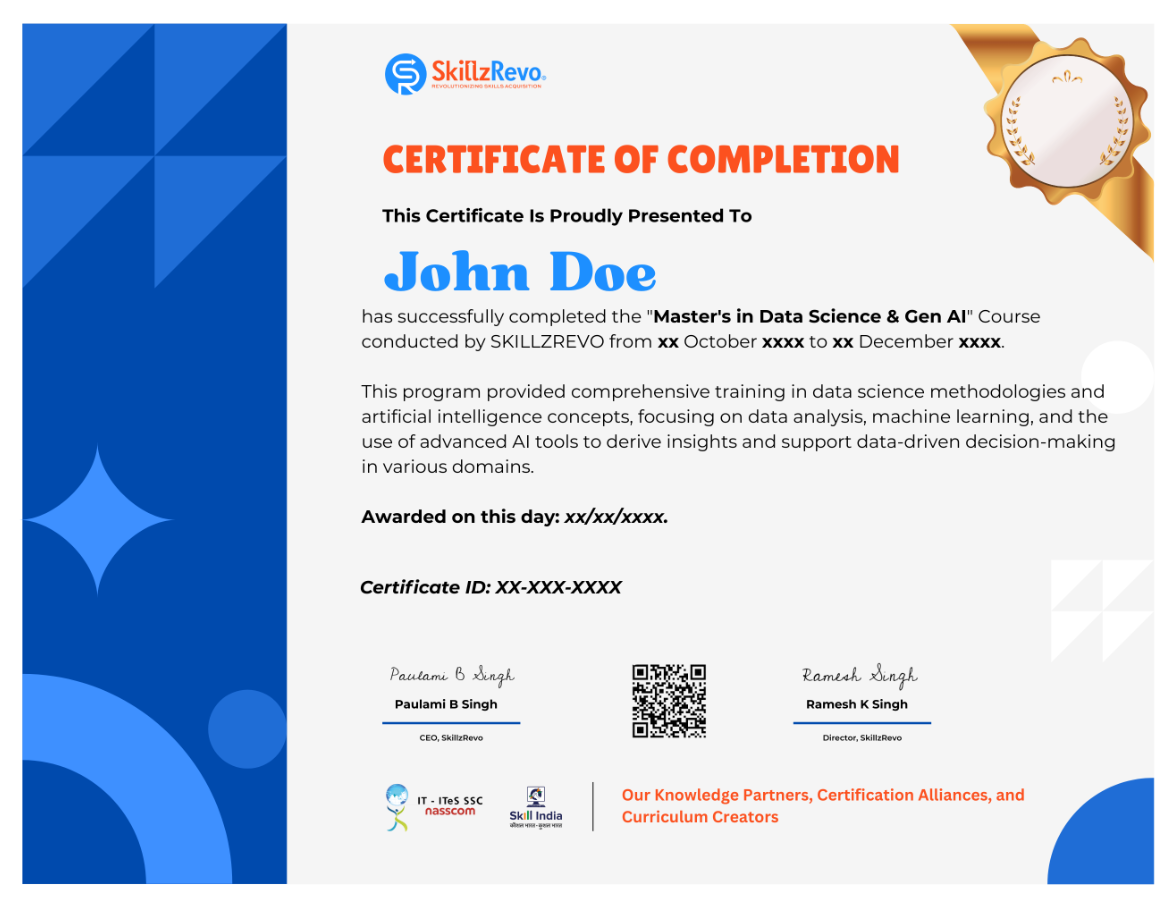
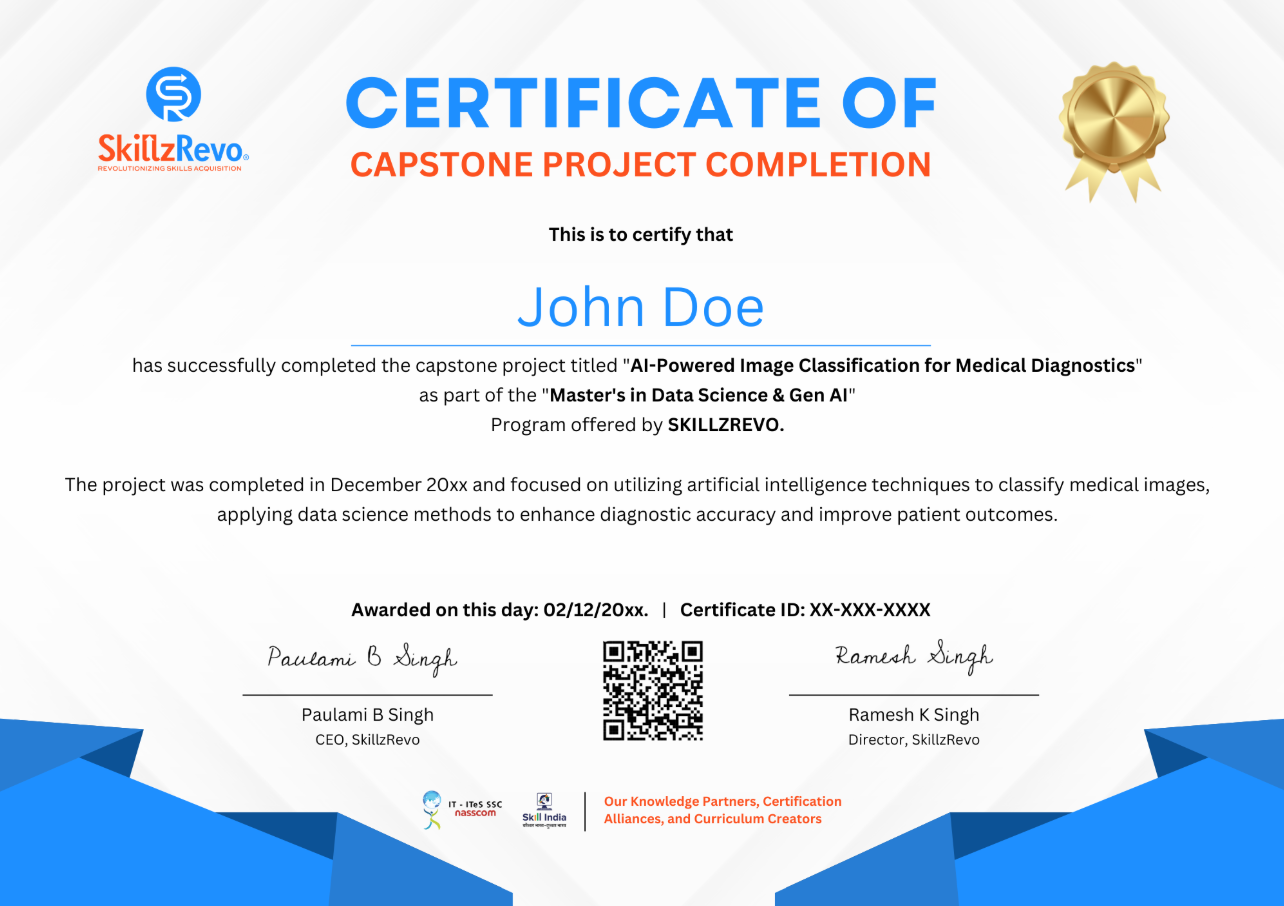
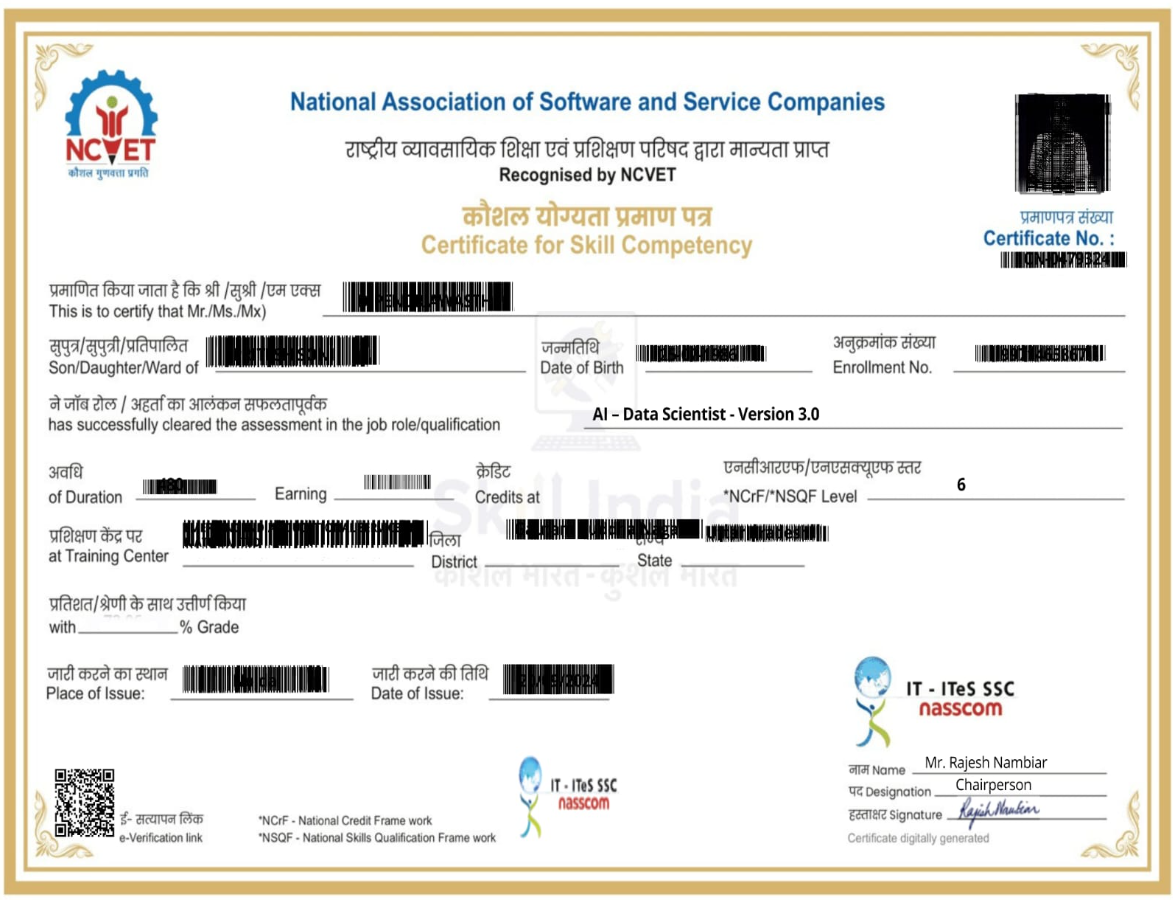
Mastering in Data Science & Generative AI program Certifications
Mastering in Data Science & Generative AI Curriculum

Module 01 - Advanced Excel
Lecture 01: Microsoft Excel Overview, Basic Navigation and Usage, Cell referencing, Formatting Excel, Advanced Formatting, Shortcuts and Basic Formulas
Lecture 02: Sorting, Filtering, Advanced Filtering, Charts, Types of Charts, Advanced Charting Techniques and Pivot Tables, Creating, Grouping and Summarizing Data
Lecture 03: Lookup Function, Vlookup, Using VLOOKUP with Multiple, Criteria Hlookup, Combining HLOOKUP with Other Functions, Match Function, Using MATCH for Dynamic Referencing
Lecture 04: Introduction to VBA & Macros, Understanding VBA basics, Debugging and error handling, Advanced VBA Techniques, Integrating VBA with Excel functions, Designing Effective Dashboards, Building a Dashboard
Lecture 05: Understanding the basics of data analysis, Data Import and Cleaning, Using Formulas and Functions, Data Visualization, Descriptive statistics
Lecture 06: Advanced Data Analysis Techniques, DAX, Scenario and Sensitivity Analysis, Dashboards and Reports, Case Studies and Real-World Applications, Practical examples of data analysis in Excel


Module 02 - Python
Lecture 08: Introduction to Python, Why Python, Variables, Data Types, Type castings, Strings, Indexing
Lecture 09: Operators and Conditional Statements, Looping Statements and its Control Statement
Lecture 10: Lambda Functions, *args, **kwargs, Functions
Lecture 11: Data Structures – List, Tuple and List Comprehensions
Lecture 12: Data Structures – Set and Dictionaries
Lecture 13: Classes, Objects and Constructors, Inheritance
Lecture 14: Polymorphism, Abstraction and Encapsulation
Lecture 15: Connecting to Databases, Establishing connections to databases, Executing SQL Queries, ORM (Object-Relational Mapping), Working with NoSQL Databases
Lecture 16: Introduction of Numpy, and Pandas
Lecture 17: Introduction of Seaborn and Matplotlib
Module 03 - Statistics
Lecture 18: Introduction to Statistics, Descriptive Statistics, Sample, Population, Major of Central Tendency, Standard Deviation
Lecture 19: Variance, Range, IQR, Outliers, Correlation, Covariance Skewness, Kurtosis, Probability
Lecture 20: Probability, Probability distributions, Central Limit Theorem, Binomial and Poisson Distribution
Lecture 21: Normal Distribution, Type I & Type II Error
Lecture 22: T-test, Z-test, Hypothesis Testing Interview Questions
Module 04 - Machine Learning
Lecture 23: Introduction to ML, Types of variables, Encoding, Normalization, Standardization, Types of ML, Linear Regression
Lecture 24: Linear Regression, Logistic Regression, SVM, KNN, Naïve Bayes, Decision Tree, Random Forest
Lecture 25: Mean Absolute Error, Mean and Root Mean Square Error, Confusion Matrix, R2 Score, Adjusted R2 Score, F1 Score
Lecture 26: Classification Report, AUC ROC, Accuracy, Ensemble Techniques, Random Forest, Xgboost
Lecture 27: Unsupervised Machine Learning, PCA, Clustering, k-Means Clustering and Hierarchical Clustering
Module 05 - Deep Learning
Lecture 28: Introduction to Neural Network, Forward Propagation, Activation Function
Lecture 29: Activation Function (Linear, Sigmoid, Relu, Leaky Relu), Optimizers, Gradient Descent, Stochastic Gradient Descent
Lecture 30: Mini batch Gradient Descent, Adagrad, Padding, Pooling, Convolution
Lecture 31: Checkpoints and Neural Networks Implementation and Introduction to Time Series Analysis
Lecture 32: Various components of the TSA, Decomposition Method (Additive Method and Multiplicative)
Lecture 33: ARMA and ARIMA
Module 06 - R-Programming
Lecture 34: Introduction to R, Installing R and RStudio, Basics of RStudio IDE, Writing and executing R scripts, Variables and Data Type in R, Operators
Lecture 35: Creating vectors, Vector indexing and slicing, Vectorized operations, Creating matrices, Matrix operations, Matrix indexing, Creating lists, Creating data frames, Indexing and manipulating lists and data frames
Lecture 36: Conditional statements, Loops, Applying functions, Flow Control, Functions in R, Object-Oriented Programming in R, S3 and S4 classes, Methods and inheritance, Creating and using objects
Lecture 37: Creating and using factors, Working with dates and times, Reading and writing (CSV files and Excel files), Introduction to the readr and readxl packages
Lecture 38: Introduction to dplyr, Selecting, filtering, and arranging data, Grouping data, Summarizing data with summarize and mutate
Lecture 39: Data Manipulation in R – dplyr, Data Manipulation & Data Visualization in R – tidyr
Lecture 40: Introduction to Text Mining, Text Preprocessing, Document-Term Matrix (DTM) and TF-IDF, Exploratory Text Analysis, Sentiment Analysis
Lecture 41: Install Necessary Packages, Create a New Package, Package Structure, Writing Functions, Documenting Functions, Testing Your Package, Building and Checking and Sharing Your Package
Lecture 42: Introduction to APIs, Using the ‘httr’ Package, GET & POST Request, and Authentication, Introduction to Web Scraping, Using the ‘rvest’ Package, Handling Dynamic Content, Handling Sessions and Cookies
Lecture 43: Connecting to Databases in R, Packages Installation, Connect to Database, Execute Queries, Write Data, Disconnect and Error Handling
Lecture 44: Project Session
Lecture 45: Orientation Session (Introduction to Business Intelligence
Module 07 - SQL
Lecture 46: Basics of Database, Types of Database, Data Types, SQL Operators, Expression, Create, Insert
Lecture 47: Drop, Truncate, Delete, Alter, Update, Select, Range, Operator, IN, Wildcard, Like, Clause
Lecture 48: Constraint, Aggregation Function, Group by, Order by, Having
Lecture 49: Joins, Case, Complex Queries, Doubt Clearing
Module 08 - Tableau
Lecture 50: Tableau Desktop, Tableau products
Lecture 51: Data import, Measures, Filters
Lecture 52: Data transformation, Marks, Dual Axis
Lecture 53: Manage worksheets, Data visualization, Dashboarding, Project
Module 09 - Power BI
Lecture 54: Power BI Platform, Process Flow
Lecture 55: Features, Dataset, Bins
Lecture 56: Pivoting, Query Group, DAX Function
Lecture 57: Formula, Charts, Reports, Dashboards
Lecture 58: Bookmarks and Buttons, Conditional Formatting and Sorting, and Report Layout and Interaction
Lecture 59: Tabular Visuals, Modelling and Calculations, Advanced Data Modelling Scenarios and DAX in Power BI
Lecture 60: Project Session
Lecture 61: Orientation Session (Introduction to Artificial Intelligence)
Module 10 - Computer Vision
Lecture 62: Introduction to Image Processing, Feature Detection, OpenCV
Lecture 63: Convolution, Padding, Pooling & its Mechanisms
Lecture 64: Forward Propagation & Backward Propagation for CNN
Lecture 65: CNN Architectures like AlexNet, VGGNet, InceptionNet, ResNet, Transfer Learning


Module 11 - NLP
Lecture 70: RL Framework, Components of RL Framework, Examples of Systems
Lecture 71: Types of RL Systems, Q-Learning
Lecture 72: Project Session
Lecture 73: Orientation Session (Introduction to Gen AI)
Module 11 - Reinforcement Learning
Lecture 70: RL Framework, Components of RL Framework, Examples of Systems
Lecture 71: Types of RL Systems, Q-Learning
Lecture 72: Project Session
Lecture 73: Orientation Session (Introduction to Gen AI)
Module 11 - Introduction to Gen AI & Huggingface Transformers Platform
Lecture 74: Introduction to AI, Hype vs. Reality, Business Applications, Ethical Considerations
Lecture 75: Introduction to Open Source Huggingface Transformers Platform
Lecture 76: Feature Engineering: Normalization, Stemming, Lemmatization, Stop Word Removal
Lecture 77: Sentiment Analysis, Sentence Classification, Generating Text


Module 11 - Language Models and Transformer Models
Lecture 78: Understanding Language Models, Introduction to Transformer Models
Lecture 79: Types of Models, Attention Mechanism, Tasks for Transformer Models
Module 11 - Large Language Models (LLMs)
Lecture 80: Introduction to Large Language Models (LLMs)
Lecture 81: Other Types of Generative AI Algorithms
Lecture 82: Hands-On Practice of NLP Tasks using Huggingface
Lecture 83: Applications of Generative AI in Business
Module 11 - Langchain, AI Application Stack and Ethical Considerations
Lecture 84: Langchain, Applied Use Case for Gen AI
Lecture 85: AI Application Stack: Infrastructure & Foundation Layer
Lecture 86: Hallucination, Data Privacy, Ethics, and Environmental Impact of AI
Lecture 87: Project Session

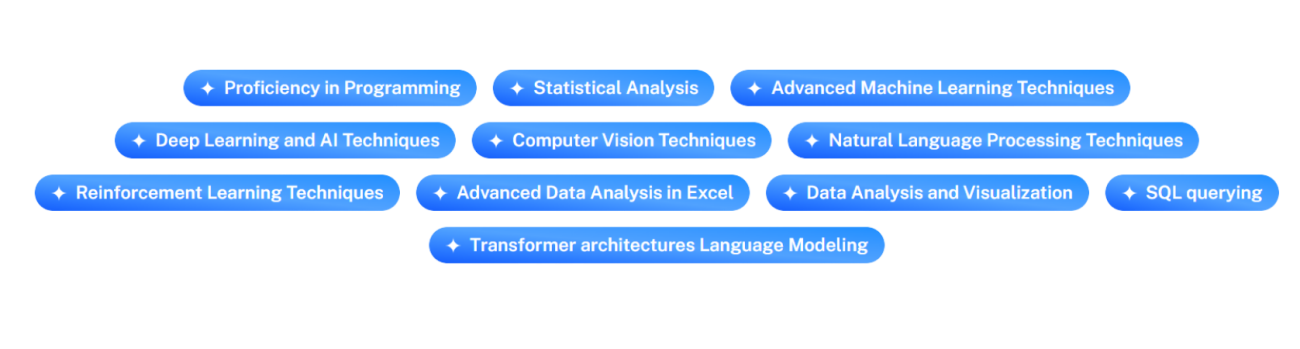
Mastering in Data Science & Generative AI Skills Covered
Mastering in Data Science & Generative AI Tools Covered

Advanced AI & Generative AI Program Benefits
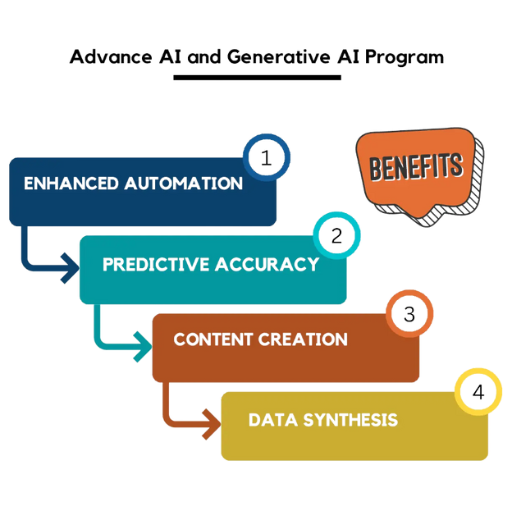
Cutting-Edge Knowledge
Stay updated with the latest AI advancements, tools, and frameworks.


Hands-On Experience
Work on real-world projects to apply your knowledge practically.
Comprehensive Learning
Gain in-depth understanding of AI concepts, methodologies, and use cases.
Expert Support
Learn directly from experienced industry professionals and mentors.
Networking Opportunities
Connect with peers and experts to expand your professional network.
Practical Applications
Develop the ability to create and deploy AI solutions that can be applied across various industries.

Advanced AI & Generative AI Program Benefits

The application process consists of three simple steps. An offer of admission will be made to selected candidates based on the feedback from the interview panel. The selected candidates will be notified over email and phone, and they can block their seats through the payment of the admission fee.