Generative AI  /  Beginner to Mastery

Certified Network Security &

Ethical Hacking Specialist

Course Duration

350 Hours


Course Material

Live. Online. Interactive.

24*7 Support

Dedicated Learning Management Team

Designed for both working professionals and fresh graduates

High Demand and Career Opportunities

KEY HIGHLIGHTS OF CERTIFIED NETWORK SECURITY AND ETHICAL HACKING SPECIALIST PROGRAM

1) Weekly sessions with industry professionals

2) Dedicated Learning Management Team

3) Duration of Course: 350 Hours

4) 350 hours of hands-on learning experience

5) Over 115 hours of live sessions spread across 5 months

6) 115 Hours of Class Recording with Lifetime Access

🔺Pre-Learning Material: 70 Hours

🔺Capstone Project Discussion & Doubt Clearing Session: 10 Hours

🔺More than 40+ industry-related projects and case studies

🔺24*7 Support

🔺1:1 Mock Interview

🔺Designed for both working professionals and fresh graduates

🔺Competitive Edge and Innovation

🔺 Total No of Weeks: 20

🔺Learn from IIT Faculty & Industry experts

🔺DPersonalised mentorship sessions with industry experts

🔺Dedicated Learning Management Team

🔺No-Cost EMI Option

🔺High Demand and Career Opportunities

🔺Problem-Solving and Critical Thinking

WHY JOIN CERTIFIED NETWORK SECURITY AND ETHICAL HACKING SPECIALIST PROGRAM?

Comprehensive Learning

Gain a broad understanding of essential data science and AI tools, from foundational skills to advanced techniques.

Real-World Application

Apply theoretical knowledge to practical projects, preparing you for real-world data challenges.

Cutting-Edge Skills

Stay ahead in the industry with training in the latest technologies like Generative AI and advanced Big Data tools.

Career Growth

Enhance your qualifications and open doors to high-demand roles in data science, AI, and Big Data.

Certified Network Security and Ethical Hacking Specialist OVERVIEW

The Certified Network Security and Ethical Hacking Specialist (CNSEHS) program is a comprehensive training course that equip the participants with both theoretical knowledge and expertise in the theoretical knowledge and hands in network safety. Through practical laboratories, case studies and real -world simulations, the learner will achieve proficiency in using moral hacking techniques to secure and reduce the wreckers, to implement and reduce security principles and strengthen safety. With the emphasis on moral practices and adherence to global cyber security standards such as ISO framework and compliance rules, this program prepares individuals to develop cyber threats. Whether you are an ambitious cyber security professional or an IT specialist to pursue your career, this certification provides in-demand skills required for important roles in network security and moral hacking.

ENROLL NOW, BOOK YOUR SEAT & AVAIL UPTO 30% FEE WAIVER

Certified Network Security and Ethical Hacking Specialist Objectives

The Certified Network Safety and Moral Hacking Experts (CNSEHS) program aims to equip participants with a deep understanding of cybersecurity, moral hacking, and network safety through a mixture of theoretical knowledge and hands-on experience. Learners will specialize in penetration testing, vulnerability evaluation, and advanced security measures to protect IT infrastructure from cyber threats. The course includes cryptographic theory, safety violation detection, risk mitigation, and compliance with global cybersecurity standards such as ISO and NIST. Additionally, participants will work with industry-standard equipment, engage in real-world projects, and develop practical skills required for the identification, analysis, and response to security events. By the end of the program, learners will be well prepared for important roles in cybersecurity and moral hacking, ensuring the safety of digital assets and defending against developing cyber threats.

                                  Why Learn Certified Network Security and Ethical Hacking Specialist ?

HIGH DEMAND FOR CYBERSECURITY PROFESSIONALS

With increasing cyber threats like phishing, ransomware, and DDoS attacks, organizations are actively seeking experts to safeguard their systems.

COMPREHENSIVE COVERAGE OF CYBERSECURITY DOMAINS

The curriculum encompasses fundamental and advanced topics, from ethical hacking to compliance and risk management, making it an end-to-end program.

GLOBAL STANDARDS AND RELEVANCE

The course is aligned with ISO 27001 standards, OWASP Top 10, and other globally recognized frameworks, ensuring learners gain industry-relevant knowledge.

CAREER GROWTH OPPORTUNITIES

Cybersecurity certifications like CNSEHS can significantly enhance your career prospects, with roles like Security Analyst, Ethical Hacker, and Cybersecurity Consultant in high demand.

Program Advantages

✅ Industry-packed courses: designed to align with the latest industry requirements, covering topics such as web app protection, network vAPT, cryptography and risk management.

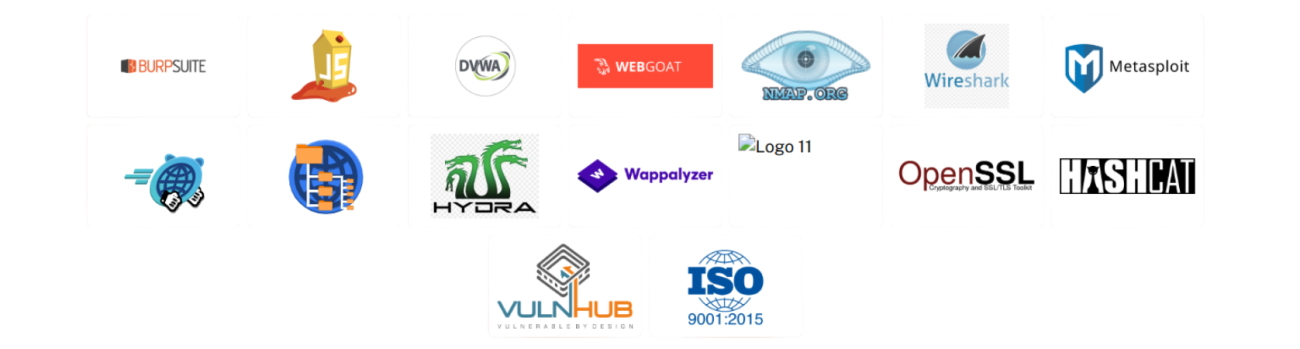
✅ Hands-On Learning: Practical sessions help to develop practical skills using devices such as NMAP, Burp Suite, Metasploit and Owasp juice shops.

✅ Expert Guidance: Learn from experienced trainers who bring the actual world insight into cyber security challenges and solutions.

✅ Global Certification: The program provides a valuable credit that validates your expertise in cyber security and moral hacking.

✅ Career Flexibility: Different roles such as penetration testers, network safety experts and information security manager.

✅ Study of the case of the real world: analyze and simulate attacks to understand weaknesses and mitigation strategies.

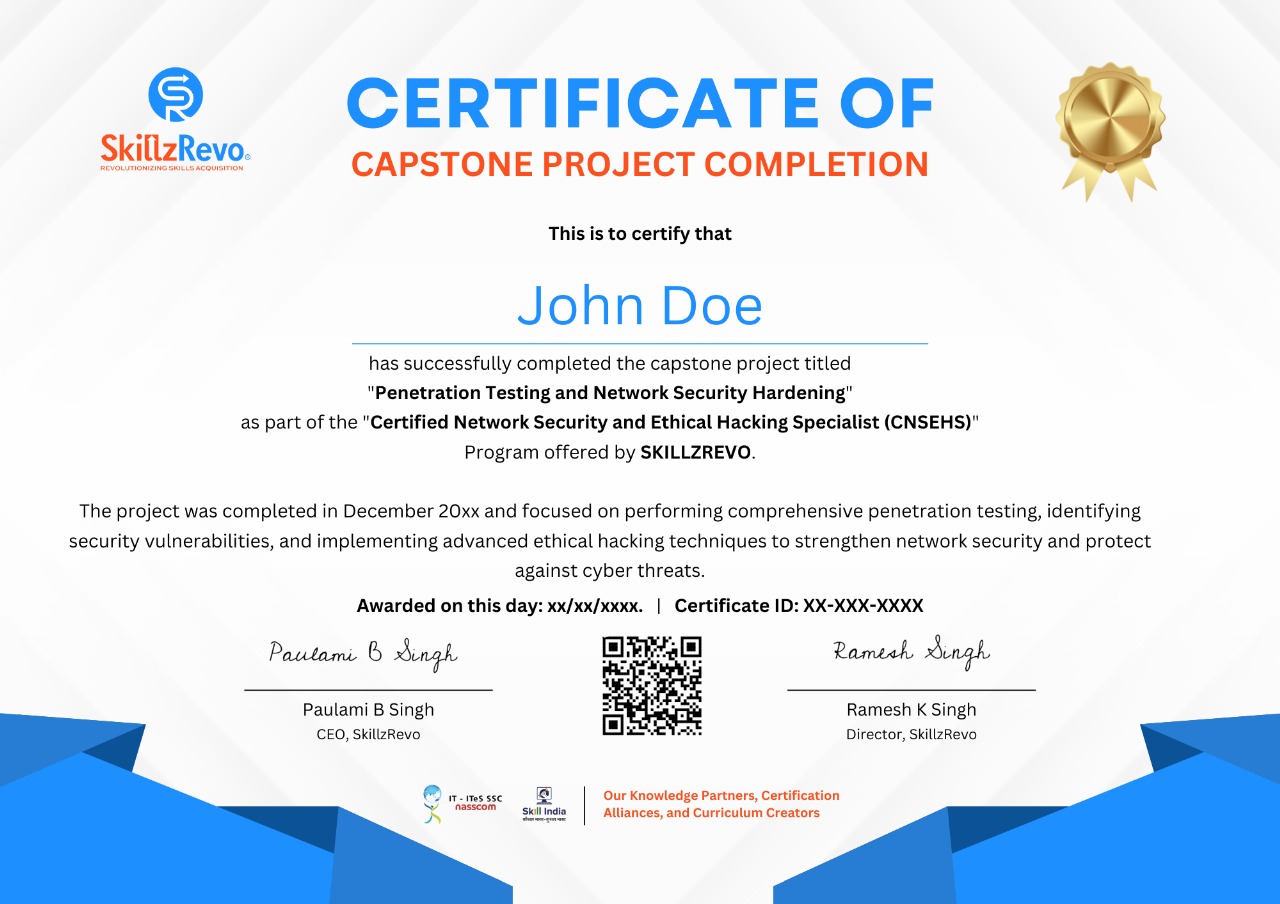
Certified Network Security and Ethical Hacking Specialist program Certifications

Certified Network Security and Ethical Hacking Specialist Curriculum

Chapter 01 - Introduction (Cyber Security Fundamentals)
Lecture 1: What is Hacking?, Computer Security Threats, Goals of Ethical Hacking, Skills and Tools required for Ethical Hackers, Process of Ethical Hacking – Demonstration Part 1 & 2
Lecture 2: Information Gathering Concepts, Foot printing, Reconnaissance, Active Passive Scanning
Lecture 3: CIA Threat, Vulnerabilities, Threat Actor, Risk etc, Advanced Cyber Security – Threats and Governance, Types of threats (spoofing, tampering, repudiation, info breach, DOS, privilege escalation), GitHub DDos Attack
Lecture 4: Types of attack (DOS, Phishing, Ransomware)
Lecture 5: Introduction and importance to information security, elements & principles (CIA)
Lecture 6: Introduction to data security, types & strategy (Encryption, Data Erasure, Masking, Resiliency)


Chapter 02 - Web Technologies, OWASP, DVWA, Bwapp (Practicals)
Lecture 7: Introduction to Web Applications, HTTP/HTTPS, Cookies, Sessions, OWASP Top 10
Lecture 8: Setting up DVWA, WebGoat, Burp Suite, Juice Shop, HackTheBox
Lecture 9: Information Gathering – Dirbuster, Gobuster, Wappalyzer, WhatWeb
Lecture 10: Authentication Testing, Brute Force (Hydra), Weak Sessions
Lecture 11: XSS Attacks (Reflected & Stored), Input Sanitization Issues
Lecture 12: SQL Injection Types (Error, Blind, Time), sqlmap
Lecture 13: File Upload, Path Traversal, Web Shells
Lecture 14: Business Logic Flaws, Privilege Escalation
Lecture 15: Hands-On HackTheBox, Juice Shop, WebGoat
Lecture 16: Reporting & Mitigation Strategies
Chapter 03 - Cryptography (Practicals)
Lecture 17: Remediation Planning, Encryption Basics, How it Works, Vulnerability Assessment
Lecture 18: Decryption, Encryption vs Decryption, Types, Algorithms & Protocols, Web App & Server Attacks
Chapter 04 - Network Concepts
Lecture 19: Information Security Controls – Types & Functions
Lecture 20: OSI Concept, Protocols, ARP, SMTP, ICMP, TCP, 3-Way Handshake
Lecture 21: Network Architecture, OSI/TCP-IP, Scanning, Enumeration, Threats
Lecture 22: Deep Packet Inspection, IDS/IPS, IP Security, ICMP Attacks
Lecture 23: TCP/UDP Security, DOS/DDOS, SSL/TLS, Access Control, Vulnerability Management
Lecture 24: Network Devices, Configurations, Firewall Setup
Chapter 05 - Network VAPT
Lecture 25: Intro to VAPT, Methodology, Lab Setup, VulnHub Basics
Lecture 26: Passive Recon, Nmap, Open Ports, Vulnerability Discovery
Lecture 27: Exploiting Misconfigured Services, Privilege Escalation
Lecture 28: Attacking Web Servers & Apps (SQLi, Command Injection)
Lecture 29: Real-Life Attack Simulation, Metasploit, Burp Suite
Lecture 30: Post-Exploitation, Lateral Movement, Credential Dumping
Lecture 31: End-to-End VAPT, Documentation, Reporting
Chapter 06 - ISO, ISMS, Compliance, Risk Management
Lecture 32: Intro to ISO 27001, ISMS Components, ISO 27002
Lecture 33: Security Misconfiguration, Cyber Laws, National Cyber Policy 2013
Lecture 34: Cyber Security Policy Ecosystem, ISO 27001 Standard
Lecture 35: Compliance & Audits, ISO Certification Preparation
Lecture 36: Governance, Risk & Compliance (GRC) Framework
Lecture 37: Risk Assessment – Identification, Mitigation, Prevention
Chapter 07 - Information Security Management – Roles & Responsibilities
Lecture 38: Hierarchy of Information Security Roles, Policy Elements

Certified Network Security and Ethical Hacking Specialist Skills Covered

Certified Network Security and Ethical Hacking Specialist Tools Covered
Certified Network Security and Ethical Hacking Specialist Program Benefits

Practical Knowledge
Hands-on learning with real-world cybersecurity challenges.
Expert Support
Training on tools used by ethical hackers and security analysts.
Industry-Relevant Curriculum
Industry-recognized curriculum designed for beginners and professionals
Cutting-Edge Technologies
Access to labs and practical exercises for a deeper understanding.
Cutting-Edge Technologies
Access to labs and practical exercises for a deeper understanding.

Admission Process

The application process consists of three simple steps. An offer of admission will be made to selected candidates based on the feedback from the interview panel. The selected candidates will be notified over email and phone, and they can block their seats through the payment of the admission fee.