Generative AI  /  Beginner to Mastery

Advanced Data Science & Generative AI with Visualization Tools

Course Duration

640 Hours


Course Material

Live. Online. Interactive.

Expertise in Big Data tools like Hadoop, Spark, and NoSQL databases.

In-depth learning of visualization tools such as Tableau and Power BI.

Taught by industry professionals with extensive experience.

Prepares for a wide range of high-demand roles in data science and AI.

KEY HIGHLIGHTS OF ADVANCED DATA SCIENCE & GENERATIVE AI WITH VISUALIZATION TOOLS PROGRAM

1) Weekly sessions with industry professionals

2) Dedicated Learning Management Team

3) 640 hours of hands-on learning experience

4) Over 240 hours live sessions spread across 11 months

5) 240 hours of self-paced Learning

6) Learn from IIT Faculty & Industry experts

🔺More than 60+ industry-related projects and case studies

🔺24*7 Support

🔺1:1 Mock Interview

🔺Designed for both working professionals and fresh graduates

🔺Competitive Edge and Innovation

🔺 Personalised mentorship sessions with industry experts

🔺Dedicated Learning Management Team

🔺No-Cost EMI Option

🔺High Demand and Career Opportunities

🔺Problem-Solving and Critical Thinking

WHY JOIN ADVANCED DATA SCIENCE & GENERATIVE AI WITH VISUALIZATION TOOLS PROGRAM?

Comprehensive Learning

Gain a broad understanding of essential data science and AI tools, from foundational skills to advanced techniques.

Real-World Application

Apply theoretical knowledge to practical projects, preparing you for real-world data challenges.

Cutting-Edge Skills

Stay ahead in the industry with training in the latest technologies like Generative AI and advanced Big Data tools.

Career Growth

Enhance your qualifications and open doors to high-demand roles in data science, AI, and Big Data.

Advanced Data Science & Generative AI with Visualization Tools OVERVIEW

This Program offers a blend of theory and practice for the upcoming data scientists or AI professionals. This book covers strong basics to advance topics of Machine Learning, Deep Learning, Computer Vision and Natural Language Processing. Those participants will also gain additional expertise in data processing, visualization and Big Data technologies of all forms including an emphasis on Generative AI. This program is modeled to teach the professionals skills for utilizing modern technologies resulting in useful data-driven insights.

ENROLL NOW, BOOK YOUR SEAT & AVAIL UPTO 30% FEE WAIVER

Advanced Data Science & Generative AI with Visualization Tools Objectives

This course will enable participants to have an in-depth understanding of advanced data science techniques and tools. The course aims to develop proficiency in critical areas such as Machine Learning, Deep learning, Computer Vision and NLP. They get to work on the most practical aspects of data management, more detailed and dynamic visualization as well Big Data technologies so that participants will be able to try some Generative AI solution on Advanced Problems. The goal of the course is to equip attendees with the knowledge and understanding necessary for transforming data into evidence-based insights, facilitate decision making under uncertainty; while providing key contributions towards innovative solutions across multiple domains.

Why Learn Advanced Data Science & Generative AI with Visualization Tools ?

Comprehensive Skill Development

Gain expertise in a wide range of data science and AI techniques, from foundational to advanced levels, ensuring a well-rounded skill set.

Industry-Relevant Knowledge

Stay ahead of the curve by learning the latest advancements in Machine Learning, Deep Learning, and Generative AI, all of which are highly sought after in the job market.

Hands-On Experience

Engage in practical exercises and real-world projects that enhance your ability to apply theoretical concepts to real data problems.

Data Management Mastery

Develop strong skills in data management, visualization, and Big Data technologies, enabling you to handle complex datasets and derive meaningful insights.

Versatile Career Opportunities

Open doors to various high-demand roles in data science, AI, Big Data, and analytics across multiple industries

Cutting-Edge AI Applications

Learn to harness the power of Generative AI, a rapidly evolving field that is transforming industries and creating new opportunities for innovation.

Professional Growth

Equip yourself with the tools and knowledge to make data-driven decisions and lead impactful projects in your organization or field of expertise.

Integrated Visualization Tools

Master Tableau, Power BI, and other visualization platforms to effectively communicate insights and drive data-informed decision-making.

Program Advantages

✅ Learn a diverse range of tools and technologies, from data science fundamentals to advanced AI, for a well-rounded education.

✅ Gain hands-on experience with real-world datasets and projects, ensuring job readiness with practical skills in each tool.

✅ Benefit from guidance by industry professionals, learning best practices and the latest industry standards.

✅ Understand how tools like Machine Learning, Big Data, and Generative AI integrate to solve complex problems.

✅ Master visualization tools like Tableau and Power BI to effectively communicate data insights.

✅Develop expertise in handling large-scale data with technologies like Hadoop, Spark, and NoSQL databases.

✅Equip yourself with in-demand skills that are valuable across various industries.

✅Enhance your career prospects by mastering the most sought-after tools and technologies in data science and AI.

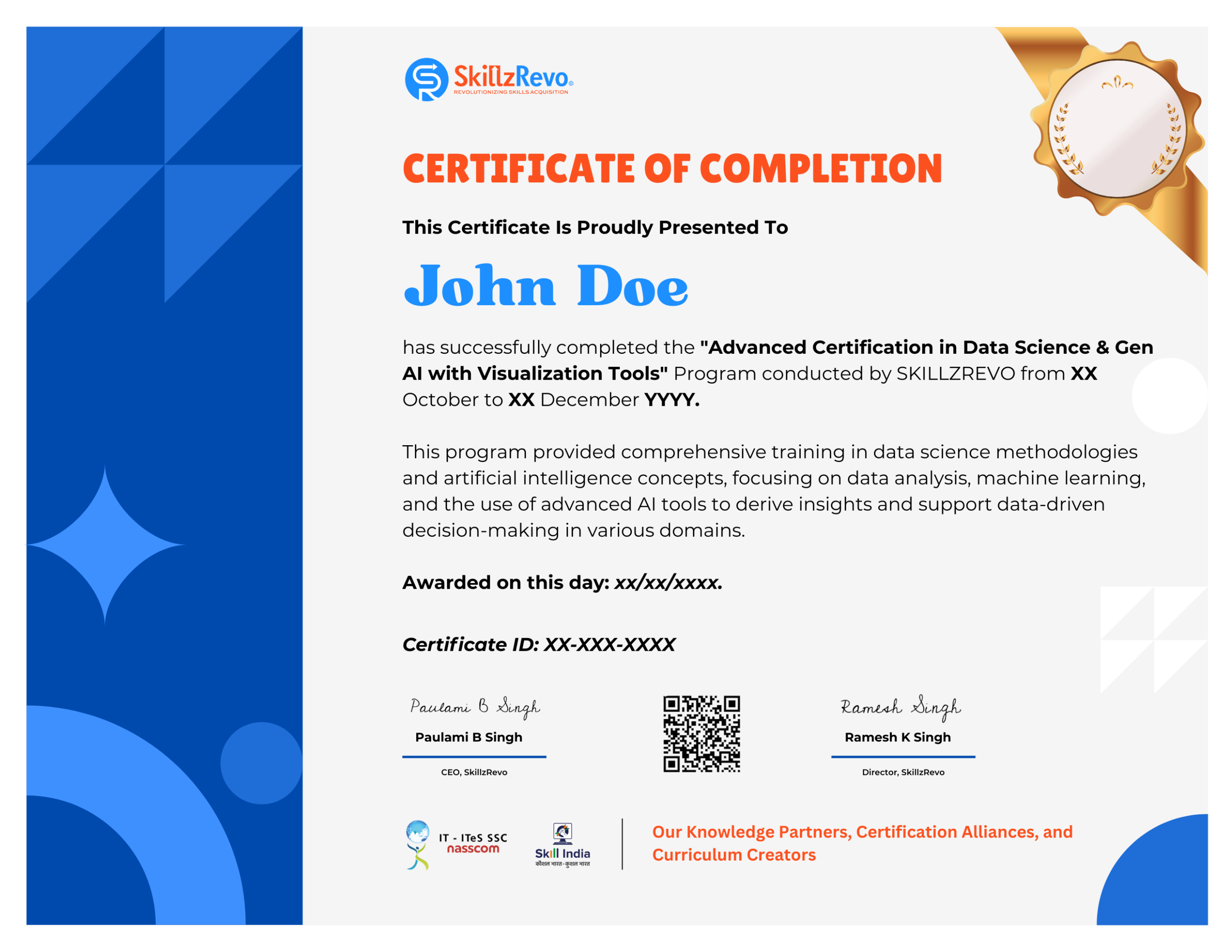
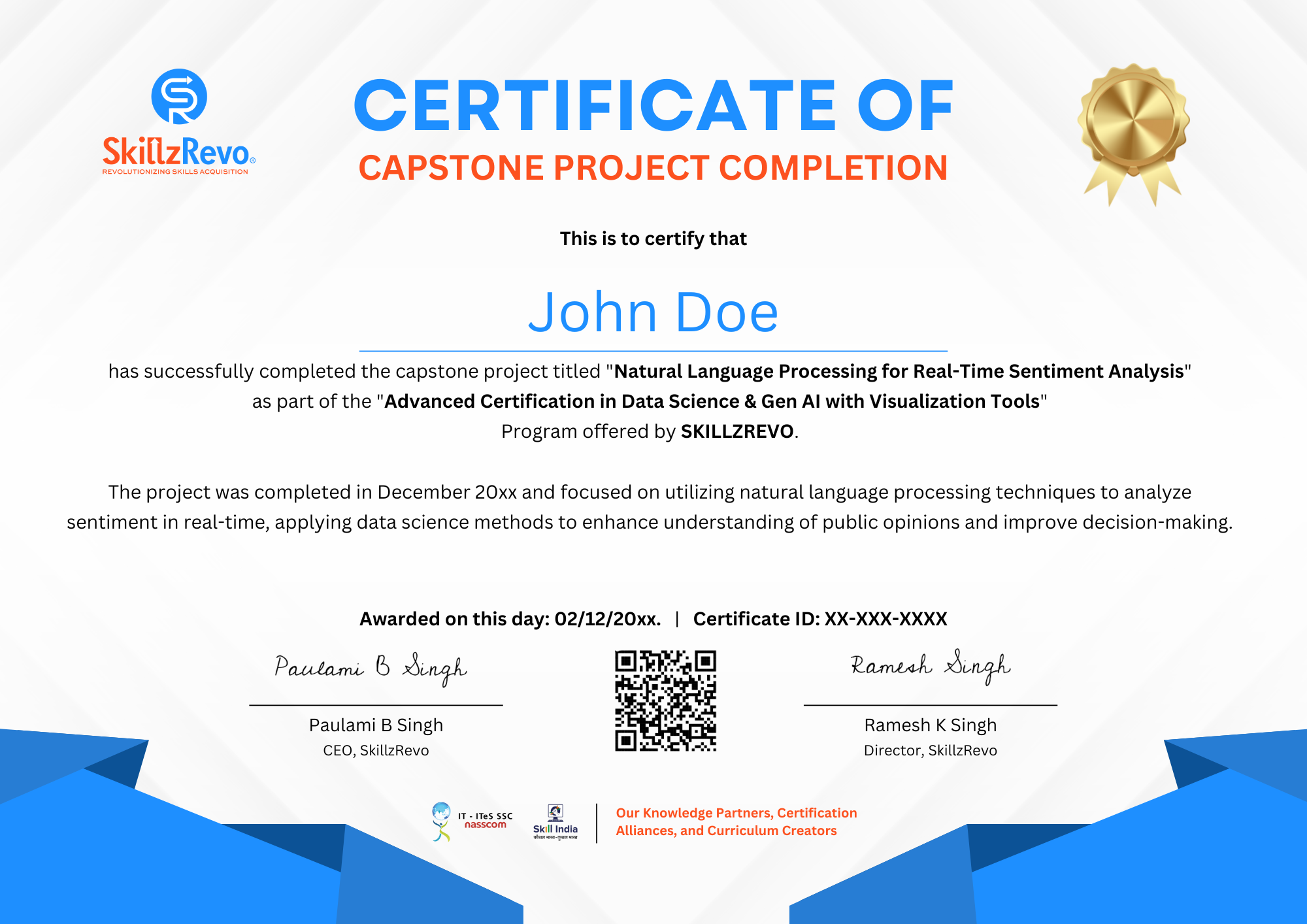
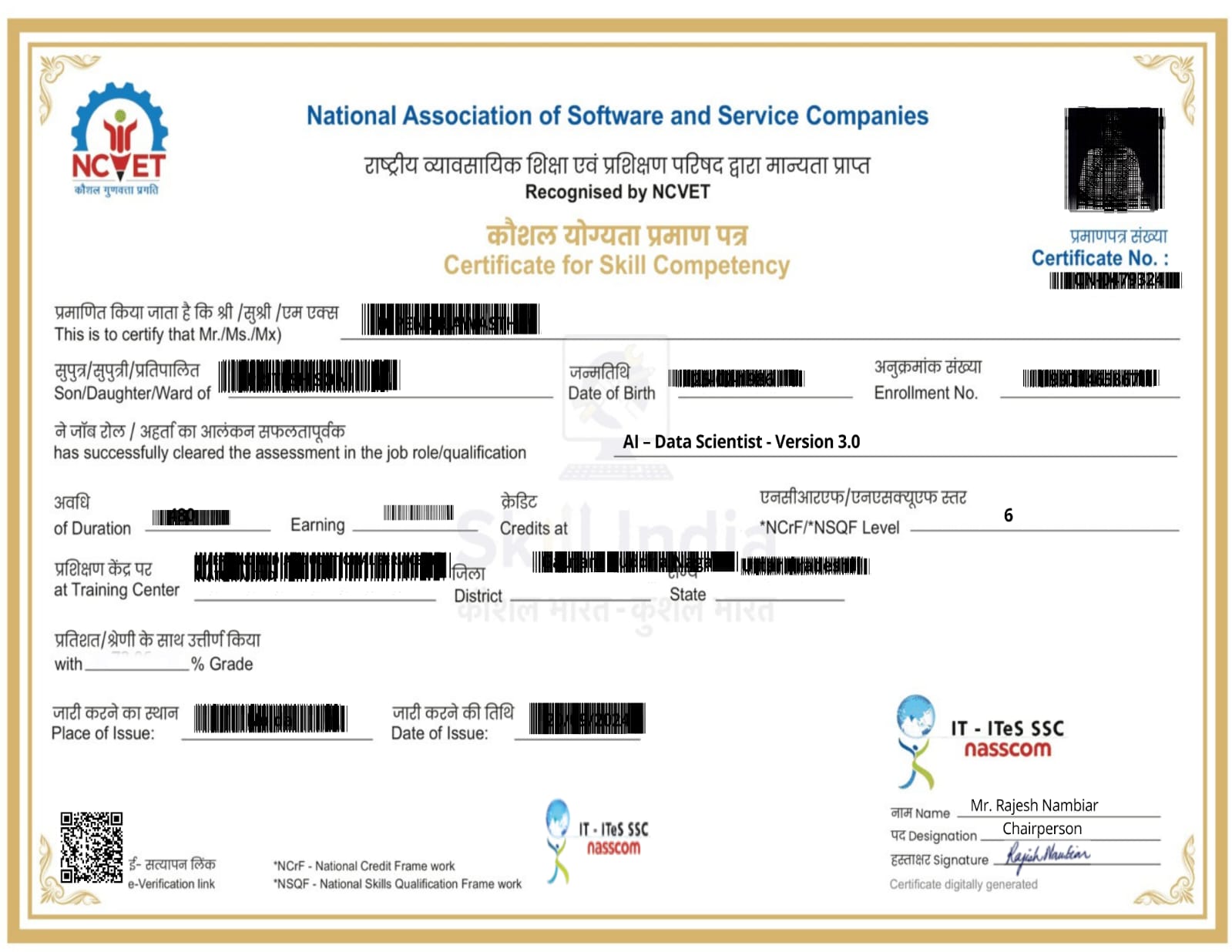
Advanced Data Science & Generative AI with Visualization Tools program Certifications
Advanced Data Science & Generative AI with Visualization Tools Curriculum

Module 01 - Python
Lecture 01: Introduction to Python
Lecture 02: Operators and Conditional Statements
Lecture 03: Lambda Functions, *args, **kwargs, Functions
Lecture 04: Data Structures – List, Tuple, and List Comprehensions
Lecture 05: Data Structures – Set and Dictionaries
Lecture 06: Classes, Objects and Constructors, Inheritance
Lecture 07: Polymorphism, Abstraction and Encapsulation
Lecture 08: Connecting to Databases
Lecture 09: Introduction to Numpy and Pandas
Lecture 10: Introduction to Seaborn and Matplotlib
Module 02 - Statistics
Lecture 11: Introduction to Statistics, Descriptive Statistics, Sample, Population, Major of Central Tendency, Standard Deviation
Lecture 12: Variance, Range, IQR, Outliers, Correlation, Covariance Skewness, Kurtosis, Probability
Lecture 13: Probability, Probability distributions, Central Limit Theorem, Binomial and Poisson Distribution
Lecture 14: Normal Distribution, Type I & Type II Error
Lecture 15: T-test, Z-test, Hypothesis Testing
Module 03 - Machine Learning
Lecture 16: Introduction to ML, Types of variables, Encoding, Normalization, Standardization, Types of ML, Linear Regression
Lecture 17: Linear Regression, Logistic Regression, SVM, KNN, Naïve Bayes, Decision Tree, Random Forest
Lecture 18: Mean Absolute Error, Mean and Root Mean Square Error, Confusion Matrix, R2 Score, Adjusted R2 Score, F1 Score
Lecture 19: Classification Report, AUC ROC, Accuracy, Ensemble Techniques, Random Forest, Xgboost
Lecture 20: Unsupervised Machine Learning, PCA, Clustering, k-Means Clustering and Hierarchical clustering
Module 04 - Deep Learning
Lecture 21: Introduction to Neural Network, Forward Propagation, Activation Function
Lecture 22: Activation Function (Linear, Sigmoid, Relu, Leaky Relu), Optimizers, Gradient Descent, Stochastic Gradient Descent
Lecture 23: Mini Batch Gradient Descent, Adagrad, Padding, Pooling, Convolution
Lecture 24: Checkpoints and Neural Networks Implementation and Introduction to Time Series Analysis
Lecture 25: Various components of the TSA, Decomposition Method (Additive Method and Multiplicative)
Lecture 26: ARMA and ARIMA
Module 05 - SQL
Lecture 27: Basic of Database, Types of Database, Data Types, SQL Operators, Expression, Create, Insert
Lecture 28: Drop, Truncate, Delete, Alter, Update, Select, Range, Operator, IN, Wildcard, Like, Clause
Lecture 29: Constraint, Aggregation Function, Group by, Order by, Having
Lecture 30: Joins, Case, Complex Queries, Doubt Clearing
Module 05 - SQL
Lecture 27: Basic of Database, Types of Database, Data Types, SQL Operators, Expression, Create, Insert
Lecture 28: Drop, Truncate, Delete, Alter, Update, Select, Range, Operator, IN, Wildcard, Like, Clause
Lecture 29: Constraint, Aggregation Function, Group by, Order by, Having
Lecture 30: Joins, Case, Complex Queries, Doubt Clearing
Module 07 - Power BI
Lecture 35: Power BI Platform, Process Flow
Lecture 36: Features, Dataset, Bins
Lecture 37: Pivoting, Query Group, DAX Function
Lecture 38: Formula, Charts, Reports, Dashboards
Lecture 39: Bookmarks and Buttons, Conditional Formatting and Sorting, and Report Layout and Interaction
Lecture 40: Tabular Visuals, Modelling and Calculations, Advanced Data Modelling Scenarios and DAX in Power BI
Module 08 - NoSQL
Lecture 41: Introduction, SQL vs NoSQL, Data Model, Data types, Object ID, Data type, Binary Data, Date, Null, Boolean, Integer, String
Lecture 42: Collection method, queries, CRUD Operation, Insert, Find, Update, Delete, Validate, Bulk write, Delete one
Module 09 - Java
Lecture 43: Introduction to Java, Installation, Syntax main()/printIn()/print()/ Variable [String, Int, Boolean, float, char], Datatypes, Operators
Lecture 44: Conditions, Loop, Methods, Class, File Handling
Module 10 - Introduction to Big Data & Hadoop
Lecture 45: Types of Data, Introduction to Big Data (History, V’s of Big Data, Advantages & Disadvantages of Big Data), Big Data Applications in Various Sectors, Introduction to Hadoop, Scaling (Horizontal and Vertical), Challenges in Scaling, Parallel Computing, Distributed Computing and Hadoop, Hadoop Tools Overview, Big Data Analytics Lifecycle
Lecture 46: On-Premises Installation Oracle Virtual Box and setup of VM & Ubuntu, Basic Linux command, Download and Installation of Hadoop, Introduction to Hadoop, Core components of Hadoop, Hadoop working, Principle
Lecture 47: VM creation on Cloud (AZURE), Configuration & Insight to Single Node Hadoop Deployment (bsshrc, hadoop-env, core-site, hdfs-site, mapred-site, yarn-site), Format HDFS Namenode.
Lecture 48: HDFS Architecture, Hadoop Commands and Implementation
Lecture 49: MapReduce, MapReduce Implementation
Lecture 50: Introduction to Hive, Hive Installation, Hive Implementation
Lecture 51: Hive Query Language, SQL Operations
Lecture 52: HIVE_SQL Operations
Module 10 - Introduction to Big Data & Hadoop
Lecture 45: Types of Data, Introduction to Big Data (History, V’s of Big Data, Advantages & Disadvantages of Big Data), Big Data Applications in Various Sectors, Introduction to Hadoop, Scaling (Horizontal and Vertical), Challenges in Scaling, Parallel Computing, Distributed Computing and Hadoop, Hadoop Tools Overview, Big Data Analytics Lifecycle
Lecture 46: On-Premises Installation Oracle Virtual Box and setup of VM & Ubuntu, Basic Linux command, Download and Installation of Hadoop, Introduction to Hadoop, Core components of Hadoop, Hadoop working, Principle
Lecture 47: VM creation on Cloud (AZURE), Configuration & Insight to Single Node Hadoop Deployment (bsshrc, hadoop-env, core-site, hdfs-site, mapred-site, yarn-site), Format HDFS Namenode.
Lecture 48: HDFS Architecture, Hadoop Commands and Implementation
Lecture 49: MapReduce, MapReduce Implementation
Lecture 50: Introduction to Hive, Hive Installation, Hive Implementation
Lecture 51: Hive Query Language, SQL Operations
Lecture 52: HIVE_SQL Operations
Module 12 - Computer Vision
Lecture 58: Introduction to Image Processing, Feature Detection, OpenCV
Lecture 59: Convolution, Padding, Pooling & its Mechanisms
Lecture 60: Forward Propagation & Backward Propagation for CNN
Lecture 61: CNN Architectures like AlexNet, VGGNet, InceptionNet, ResNet, Transfer Learning
Module 13 - Natural Language Processing(NLP)
Lecture 62: Introduction to Text Mining, Text Processing using Python and Introduction to NLTK
Lecture 63: Sentiment Analysis, Topic Modeling (LDA) and Named Entity Recognition
Lecture 64: BERT (Bidirectional Encoder Representations from Transformers), Text Segmentation, Text Mining, Text Classification
Lecture 65: Automatic Speech Recognition, Introduction to Web Scraping
Module 14 - Reinforcement Learning(RL)
Lecture 66: RL Framework, Component of RL Framework, Examples of Systems
Lecture 67: Types of RL Systems, Q-Learning
Module 15 - Foundations of Generative AI
Lecture 68: Evolution of AI (Rule-based → ML → GenAI → Agentic AI), Hype vs Reality, Industry Adoption of GenAI, Ethical & Responsible AI
Lecture 69: How Generative AI Works: LLM intuition, Tokens, Embeddings, Context Window, Capabilities & Limitations (Hallucination, Bias, Cost)
Lecture 70: Multimodal AI Systems: Text, Image, Tables, Documents. Industry Applications. Case Study: Invoice and financial report understanding
Lecture 71: Core Generative AI Tasks: Text generation, Classification, Summarization, Question Answering. Hands-on Case Study: Resume screening and document summarization
Lecture 72: Prompt Engineering Fundamentals: Zero-shot, Few-shot, Role Prompting, Prompt Templates. Case Study: Marketing content generation
Module 16 - Prompt Engineering, RAG & Multimodal RAG
Lecture 73: Advanced Prompting: Prompt Debugging, Guardrails, Prompt Evaluation, Response Optimization. Hands-on Case Study: Improving incorrect chatbot responses
Lecture 74: Retrieval-Augmented Generation (RAG): Embeddings, Vector Search, RAG Architecture. Hands-on Case Study: Chat with company policy documents
Lecture 75: Multimodal RAG: Text + Image + Table Retrieval, Document Intelligence. Case Study: Invoice and scanned document Q&A system
Module 17 - Agentic AI Systems & Framework Internals
Lecture 76: Introduction to Agentic AI: Agent vs Chatbot Workflow, Agent Lifecycle, Levels of Autonomy, Human-in-the-loop Systems. Case Study: AI Research Assistant
Lecture 77: Agent Architecture & Design Patterns: Planner-Executor-Evaluator, ReAct Pattern, Tool-Use Pattern, Reflection. Hands-on Case Study: Recruiter Agent design
Lecture 78: Agent Memory, Tools & Planning: Short-term vs Long-term Memory, Tool Calling, Feedback Loops. Case Study: Customer support agent with memory
Lecture 79: Agent Framework Internals (Conceptual): How frameworks manage chains, agents, tools and memory. Positioning of LangChain. Design considerations without deep syntax
Module 18 - Fine-Tuning, No-Code Agents & Capstone Project
Lecture 80: LLM Fine-Tuning from an Industry Perspective: Prompting vs RAG vs Fine-Tuning, PEFT and LoRA concepts, Cost, Risk and Governance Considerations
Lecture 81: No-Code and Low-Code Agentic AI: Use cases, Benefits and Limitations, Visual Agent Design. Demo: No-code content or support agent
Lecture 82: Capstone Design Session: End-to-End Generative AI and Agentic AI Solution. Hands-on Project: AI Customer Support Supervisor Agent

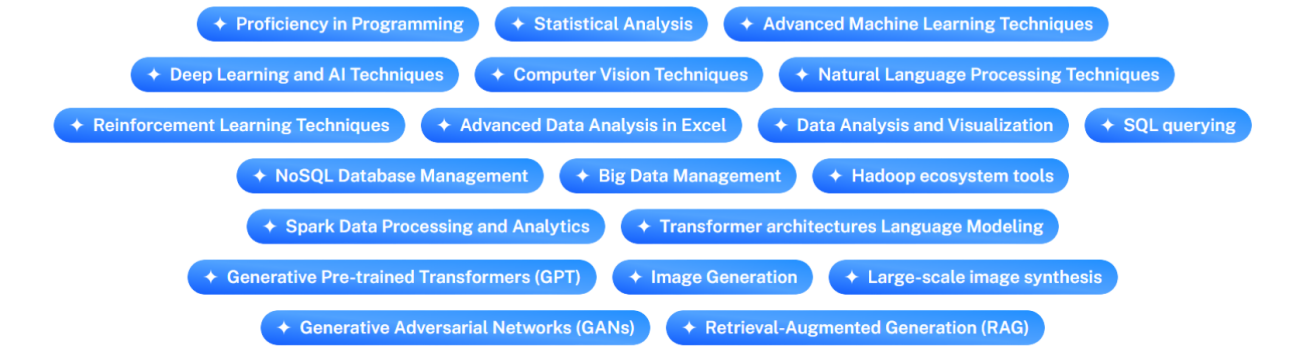
Advanced Data Science & Generative AI with Visualization Tools Skills Covered
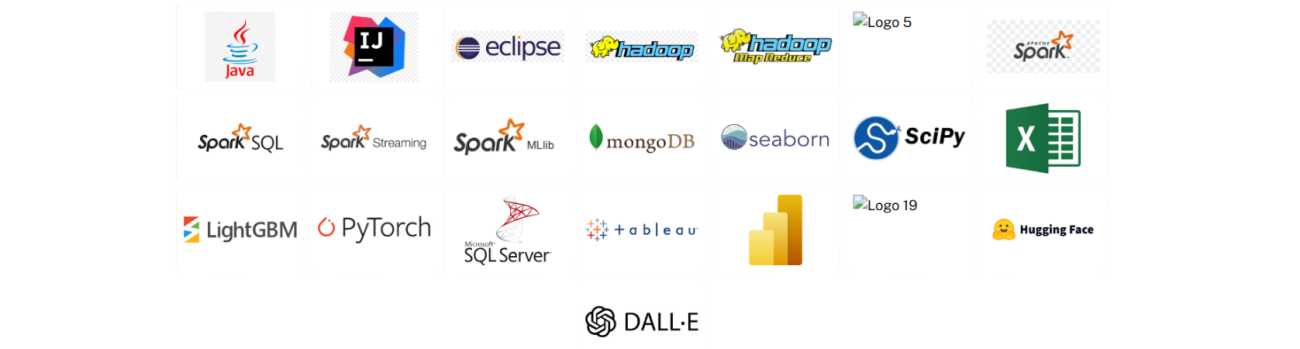
Advanced Data Science & Generative AI with Visualization Tools Tools Covered
Advanced Data Science & Generative AI with Visualization Tools Program Benefits
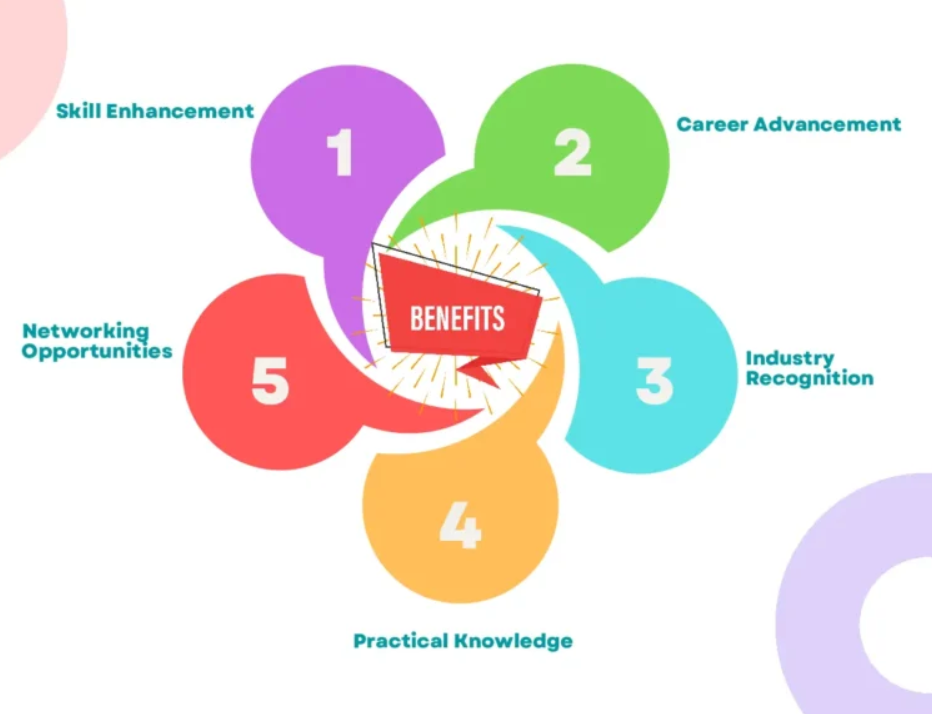
Comprehensive Skill Set
Gain expertise across a wide range of data science and AI tools, making you versatile in the job market.
Practical Knowledge
Apply what you learn through hands-on projects, ensuring you’re ready for real-world challenges.
Career Advancement
Enhance your qualifications for high-demand roles in data science, AI, and Big Data industries.
Industry-Relevant Curriculum
Learn the latest techniques and technologies that are directly applicable to current industry needs.
Expert Support
Receive instruction and insights from industry professionals with deep experience in data science and AI.
Cutting-Edge Technologies
Stay ahead of the curve with training in the latest advancements like Generative AI and Big Data tools.
Integrated Learning Approach
Understand how to combine different tools and techniques to develop comprehensive data-driven solutions.
Data-Driven Decision Making
Equip yourself with the ability to make informed decisions based on data analysis and visualization.
Flexible Learning
Benefit from a program designed to accommodate both beginners and experienced professionals, allowing for growth at any stage.

Admission Process

The application process consists of three simple steps. An offer of admission will be made to selected candidates based on the feedback from the interview panel. The selected candidates will be notified over email and phone, and they can block their seats through the payment of the admission fee.