Generative AI  /  Beginner to Mastery

Advanced Cybersecurity and Threat

Management Certification

Course Duration

550 Hours


Course Material

Live. Online. Interactive.

Compliance and Governance Awareness (ISO standards, GRC frameworks)

Hands-On Simulations (cyberattacks, phishing, malware analysis)

Career Preparation for Security Analysts, SOC Engineers, and Cyber Forensic Experts

Latest Tools & Technologies (practical exposure to SIEM, IDS/IPS, and other security tools used in the industry).

KEY HIGHLIGHTS OF ADVANCED CYBERSECURITY AND THREAT MANAGEMENT CERTIFICATION PROGRAM

1) Weekly sessions with industry professionals

2) Dedicated Learning Management Team

3) 550 hours of hands-on learning experience

4) Over 185 hours live sessions spread across 8 months

5) 185 Hours of Class Recording with Lifetime Access

6) Pre-Learning Material: 70 Hours

🔺Learn from IIT Faculty & Industry experts

🔺Personalised mentorship sessions with industry experts

🔺Dedicated Learning Management Team

🔺Designed for both working professionals and fresh graduates

🔺Competitive Edge and Innovation

🔺More than 40+ industry-related projects and case studies

🔺24*7 Support

🔺No-Cost EMI Option

🔺High Demand and Career Opportunities

🔺Problem-Solving and Critical Thinking

WHY JOIN ADVANCED CYBERSECURITY AND THREAT MANAGEMENT CERTIFICATION PROGRAM?

Comprehensive Learning

Gain a broad understanding of essential data science and AI tools, from foundational skills to advanced techniques.

Real-World Application

Apply theoretical knowledge to practical projects, preparing you for real-world data challenges.

Cutting-Edge Skills

Stay ahead in the industry with training in the latest technologies like Generative AI and advanced Big Data tools.

Career Growth

Enhance your qualifications and open doors to high-demand roles in data science, AI, and Big Data.

Advanced Cybersecurity and Threat Management Certification OVERVIEW

The Advanced Cyber ​​Safety and Danger Management Certification Program (ACSTMCP) is a comprehensive training program designed to specialize in cyber defense, danger intelligence, network security and moral hacking. The program includes compliance with global security standards such as SOC operations, SIM implementation, admission tests, forensic checks and ISO and NIST. Participants will get the threat, firewall management, prevention of infiltration, vulnerable evaluation with Nesus and experience in cryptographic security. With the study of the real -world case, safety simulation and a strong attention to practical laboratories, this certification ensures that the learners develop both aggressive (ethical hacking, penetration testing) and defensive (event reaction, danger mitigation) cyber security skills. Whether you are an IT professional, cyber security expert, or aspiring for moral hackers, this program prepares you to combat cyber threats, increase security flexibility and protect important infrastructure.

ENROLL NOW, BOOK YOUR SEAT & AVAIL UPTO 30% FEE WAIVER

Advanced Cybersecurity and Threat Management Certification Objectives

The Advanced Cybersecurity and Threat Management Certification Program aims to develop professionals with expertise to effectively identify, prevent and respond to the threats of cyber security. The program focuses on security operations, threat intelligence, ethical hacking and network security, ensuring that participants ensure that they achieve skills on hand in compliance with SOC operations, SIEM deployment, penetration testing, forensic investigation, and compliance with global security frameworks like ISO and NIST.By the end of the course, the learners will be able to analyze and reduce cyber threats, configure firewalls and infiltration prevention systems, conduct vulnerability assessments using devices such as Nessus, conduct forensic checks, and apply cryptographic security measures. With a strong emphasis on real -world case studies and simulation on hand, this certification prepares participants for important roles in cyber security, making them able to protect organizational security and protect against developing cyber threats.

Why Learn Advanced Cybersecurity and Threat Management Certification ?

HIGH DEMAND FOR CYBERSECURITY EXPERTS

With rising cyber threats, organizations are actively seeking skilled professionals to secure their systems and data.

COMPREHENSIVE SKILL DEVELOPMENT

Gain expertise in Security Operations, Threat Intelligence, Ethical Hacking, and Incident Handling to protect networks from cyber threats.

HANDS-ON TRAINING

Work with industry-standard tools like Splunk (SIEM), Nessus (Vulnerability Assessment), and Firewalls to develop practical cybersecurity skills.

REAL-WORLD APPLICATION

Learn through case studies, security simulations, and forensic investigations, ensuring you can tackle real-world security challenges.

Program Advantages

✅ Covers Security Operations, Ethical Hacking, Threat Intelligence, Incident Handling, and Forensic Investigation in this program.

✅ Practical labs, real-world case studies, and security simulations ensure industry-relevant, job-ready skills.

✅ Designed by cybersecurity professionals to align with industry standards and best practices like ISO and NIST.

✅ Gain experience with SIEM (Splunk), Nessus (Vulnerability Assessment), Firewalls, Intrusion Detection Systems, and Cryptographic Security.

✅Prepares learners for high-demand cybersecurity roles such as SOC Analyst, Cybersecurity Engineer, Penetration Tester, and Ethical Hacker.

✅Enhances credibility and improves job prospects in top organizations worldwide.

✅ Keeps learners ahead in the ever-evolving field of cybersecurity with the latest tools and threat mitigation techniques.

✅ Cybersecurity is a continuously evolving field, and this program equips you with the latest skills and knowledge to stay ahead.
Mastering in Cyber Security & Forensics program Certifications

Mastering in Cyber Security & Forensics Curriculum

Module 01 - Introduction(Cyber Security Fundamentals)
Lecture 01: What is Hacking ? , Computer Security Threats, Goals of Ethical Hacking, Skills and Tools required for Ethical Hackers, Process of Ethical Hacking, Process of Ethical Hacking – Demonstration Part 1,Process of Ethical Hacking – Demonstration Part 2
Lecture 02: Information Gathering Concepts, Foot printing, Reconnaissance, Active Passive Scanning
Lecture 03: CIA (Confidentiality, Integrity & Availability) Threat, Vulnerabilities, Threat Actor, Risk etc definitions & concept. Advanced Cyber Security – Threats and Governance, What are Threats?, Types of threats (spoofing, tampering, repudiation, information breach, DOS, elevation of privilege),GitHub DDos Attack
Lecture 04: Types of attack(DOS, Phishing, Ransomware)
Lecture 05: Introduction and importance to information security, elements of information security (purpose, audience and scope, security objective-CIA, Authority and access control, data classification (level 1-5), support and operation, security awareness, responsibilities rights and duty. Principle of Information security (Confidentiality, Integrity, Availability)
Lecture 06: Introduction to data security, types of data security (Encryption, Data Erasure, Data Masking, Data Resiliency), data security strategy (Physical security of servers and user devices, Access management and controls, Backups)


Module 02 - Web Technologies , OWASP ,DVWA ,Bwapp with practicals
Lecture 07: Introduction to Web Applications: Basics of Web Applications, HTTP/HTTPS, Cookies, Sessions, Authentication Mechanisms, Overview of OWASP Top 10
Lecture 08: Setting Up the Environment: Installing DVWA, WebGoat, and Burp Suite, Introduction to Common Testing Platforms (OWASP Juice Shop, HackTheBox Web Challenges)
Lecture 09: Information Gathering: Understanding the Target Application, Enumerating Directories and Files (Dirbuster, Gobuster), Discovering Endpoints, Identifying Technologies (Wappalyzer, WhatWeb)
Lecture 10: Authentication and Session Management: Testing Login Mechanisms, Brute Forcing Credentials (Hydra), Exploiting Weak Sessions, Hands-On with DVWA
Lecture 11: Input Validation Attacks I: Cross-Site Scripting (XSS) – Reflected and Stored, Input Sanitization Issues, Demonstration on WebGoat and OWASP Juice Shop
Lecture 12:  Input Validation Attacks II: SQL Injection – Error-Based, Blind, and Time-Based, Exploiting SQL Vulnerabilities Using Tools (sqlmap), Hands-On Challenges
Lecture 13: File Upload and Path Traversal Attacks: Exploiting Unsecured File Uploads, Testing for Path Traversal, Uploading Web Shells, Hands-On with DVWA
Lecture 14: Business Logic Vulnerabilities and Access Control: Testing Business Logic Flaws, Horizontal and Vertical Privilege Escalation, Bypassing Access Controls
Lecture 15: Hands-On Exploitation on Real Scenarios: Solving Web Application Challenges from HackTheBox, Pentesting Simulated Applications on OWASP Juice Shop and WebGoat
Lecture 16: Reporting and Mitigation Strategies: Writing Professional Reports, Explaining Vulnerabilities and Risks, Recommendations for Mitigation, Case Study Discussion
Module 03 - Cryptography with Practicals

Lecture 17: Remediation Planning, Encryption, What is Encryption?, Prerequisites for Encryption, How does Encryption work?, Vulnerability Assessment

Lecture 18: What is Decryption? , Encryption Vs Decryption, Types of Encryption, Encryption Algorithms and Protocols, Web application architecture, Web application attacks, Web server architecture, Web server attacks


Module 04 - Network Concepts
Lecture 19:  Introduction to information security controls, types of controls (organizational control, people control, physical control, technological control), preventive, corrective and digestive control
Lecture 20: OSI concept, Protocols, ARP, SMTP, ICMP, TCP, 3 way Handshaking
Lecture 21:  Security Market Outlook, Computer Networks – Architecture, Layered architecture, Open Systems Interconnect (OSI) Model, Transmission Control Protocol/Internet Protocol (TCP/IP), Network Scanning, Enumeration, Common Network Threats/Attacks, Packet Inspection
Lecture 22: Deep Packet Inspection(Intrusions detection system and Intrusion Prevention, System), IP Security, ICMP attacks
Lecture 23: TCP and UDP Security. Attacking Availability: Denial-of-Service, attacks, Distributed DOS attacks, SSL/TLS Data/Application Security: confidentiality, Integrity, availability, authorization, authentication, identification, non-repudiation, types of control (preventive, detective, corrective, deterrent, recovery, compensating), access control, Security Vulnerability Management
Lecture 24: Network devices (Hub, Switch, Router, Bridge, Gateway, Modem, Repeater, Access Point), Configuration of network devices, Network configuration tool, Firewall, Firewall configuration
Module 05 - Network VAPT
Lecture 25: Introduction to Network VAPT: Understanding VAPT, Methodology (Information Gathering, Scanning, Exploitation, Reporting), Setting Up Lab Environment, Basics of VulnHub
Lecture 26: Information Gathering: Passive Reconnaissance Techniques, Active Scanning with Nmap, Enumerating Services, Identifying Open Ports, Vulnerability Discovery
Lecture 27:  Exploitation Techniques I: Exploiting Misconfigured Services (e.g., FTP, SMB), Privilege Escalation Basics, Solving a Beginner VulnHub Machine
Lecture 28: Exploitation Techniques II: Attacking Web Servers and Applications (SQL Injection, Command Injection), Exploiting Vulnerable Web Servers from VulnHub
Lecture 29: Simulating Real-Life Attacks: Simulating Attacks Using Tools (Metasploit, Burp Suite), Exploiting Common Weaknesses (Default Credentials, Outdated Software)
Lecture 30: Post-Exploitation Techniques: Maintaining Access, Dumping Credentials, Lateral Movement, Hands-On with Intermediate-Level Machines from VulnHub
Lecture 31: Case Study and Reporting: End-to-End VAPT Simulation on a Complex VulnHub Machine, Documentation and Reporting Vulnerabilities, Recommendations for Mitigation


Module 06 - ISO , ISMS , Compliance , Risk Management
Lecture 32: Introduction to ISO Standards: Overview of ISO 27001, Key Components of ISMS (Information Security Management System), Relationship with ISO 27002, Objectives of Implementing ISO Standards
Lecture 33: Security Misconfiguration, Active and Passive Attack, Cyber Security Regulations, Roles of International Law, the state and Private Sector in Cyberspace, Cyber Security Standards. The INDIAN Cyberspace, National Cyber Security Policy 2013. Elements of an information security policy (Purpose, scope, Objective, authorization and access control, classification, data support operation, Security standard and guideline(COSO, COBIT,ITIL, NIST, NSA, ISO, IT act, Copyright, Patent law, IPR), Laws of Indian Govt.
Lecture 34:  Cyber Security Landscape Cyber security Policy Management , Cyber Security Policy Ecosystem, Cyber Security Policy ,Management Design, Cyber Security FrameWorks, ISMS Environment, Frameworks, ISO27001 Standard
Lecture 35: Compliance and Audits: Importance of Regulatory Compliance, Internal and External Audits, Audit Phases (Planning, Execution, Reporting), Preparing for ISO 27001 Certification
Lecture 36: Governance, Risk, and Compliance (GRC): Introduction to GRC Frameworks, Alignment with Business Objectives, Benefits of GRC Implementation, Case Study on Effective GRC Practices
Lecture 37: Introduction to Risk Assessment, Identification of Risk assessment, Risk assessment model (Identification, Assessment, Mitigation, Preventation), role and need of risk assessment


Module 07 - Information Security Management - Roles and Responsibilities
Lecture 38: Hierarchy of Information security (Board of Director, CIO, CISO, CEO, System Architect, System Engineer, Security Director, System Admin, Security Analyst, IS Auditor, DB Admin), Importance of information security policy, element of information security (purpose, audience, CIA, encryption policy, data backup policy
Module 08 - Introduction to SOC
Lecture 39: Introduction to SOC and its Importance: Overview of SOC, Types of SOCs (In-House, Managed, Virtual), SOC Architecture (SIEM, EDR, Threat Intelligence Tools), Key Roles in SOC (Analyst, Manager, Engineer), SOC’s Role in Cyber Defense
Lecture 40: Indicators of Compromise (IOCs) and Indicators of Attack (IOAs): Differences Between IOCs and IOAs, Identifying IOCs (File Hashes, IPs, Domains, Logs), Understanding IOAs (Attack Patterns, Suspicious Behaviors), Real-World Examples
Lecture 41: Tactics, Techniques, and Procedures (TTPs): Introduction to TTPs, Frameworks (MITRE ATT&CK), Correlating TTPs with IOCs and IOAs, Case Study: Mapping an Attack Lifecycle Using TTPs, Practical Exercise with Sample Data


Module 09 - Incident Handling Concepts
Lecture 42: Incidents, types of Incidents, Impact of incidents, Information (alert,logs, network flow), Phases of incident handling, incident response life cycle


Module 10 - Security Devices , Security Configuration & Management , Sniffing Concepts , Network Attacks with Practicals
Lecture 43: Firewall, why firewall, DMZ, troubleshooting Cisco IOS Firewall, troubleshooting routers, , anti virus and anti spam ware, incident response process (identification, recording, response, communication, containment, classification, investigation) 
Lecture 44: Unauthorized Access Incidents, Traffic filtering( NAT-Network Address Translation, VPN- Virtual Private Network
Lecture 45: IDP-Intrusion Detection & Prevention, CISCO IOS Firewall IDS Configuration Initializing Cisco IOS Firewall IDS , Initializing the Post Office, Configuring and Applying Audit Rules, Verifying the Configuration)
Lecture 46: IPS configuration, IPS Tuning, SNMP Configuration, Configuration of MoD Security
Lecture 47: Patch Management (windows Server Update Services)


Module 11 - SIEM and Splunk Implementation with Practicals
Lecture 48:  Introduction to SIEM and Splunk: Understanding SIEM, Key Components, Benefits, Overview of Splunk Architecture, Setting up Splunk Environment (Installation and Configuration)
Lecture 49:  Data Onboarding: Collecting logs from different sources (Web Server, Application Logs, System Logs), Parsing and Indexing, Exploring Splunk’s Data Inputs and Forwarders
Lecture 50: Splunk Search and Analysis: Writing SPL Queries, Using Search, Stats, and Visualization Tools, Identifying Anomalies and Patterns in Logs, Hands-on Analysis of Security Logs
Lecture 51: Real-world Use Cases: Security Incident Detection (Failed Login Attempts, Brute Force), Dashboard Creation, Alerts and Reporting, Capstone Activity: Analyzing a Security Breach Scenario Using Splunk


Module 12 - Configuration Audits and System Hardening
Lecture 52:  Configuration Audit and System Hardening: Introduction to Secure Configurations, Using Nessus for Vulnerability and Configuration Scans, Hands-on Hardening with HardeningKitty


Module 13 - Configuration Audits and System Hardening
Lecture 53:  Introduction to Incident Response and Cyber Forensics: Incident Response Lifecycle, Key Components of Incident Response, Role of Cyber Forensics in IR, Overview of Tools (Cyber Triage, Autopsy, FTK Imager, Rkhunter)
Lecture 54: Memory and Disk Forensics: Capturing Memory Dumps, Imaging Disks with FTK Imager, Basics of Artifact Analysis, Introduction to Autopsy for Disk Analysis
Lecture 55: Rootkit Detection and Analysis: Using Rkhunter for Rootkit Detection, Investigating Suspicious Activity on Linux Systems, Hands-on with Cyber Triage for Live System Analysis
Lecture 56: Case Study and Hands-On Exercise: Investigating a Simulated Cyber Breach, End-to-End Incident Response Workflow, Evidence Collection, Analyzing Logs and Forensic Artifacts, Reporting Findings


Advanced Cybersecurity and Threat Management Certification Skills Covered

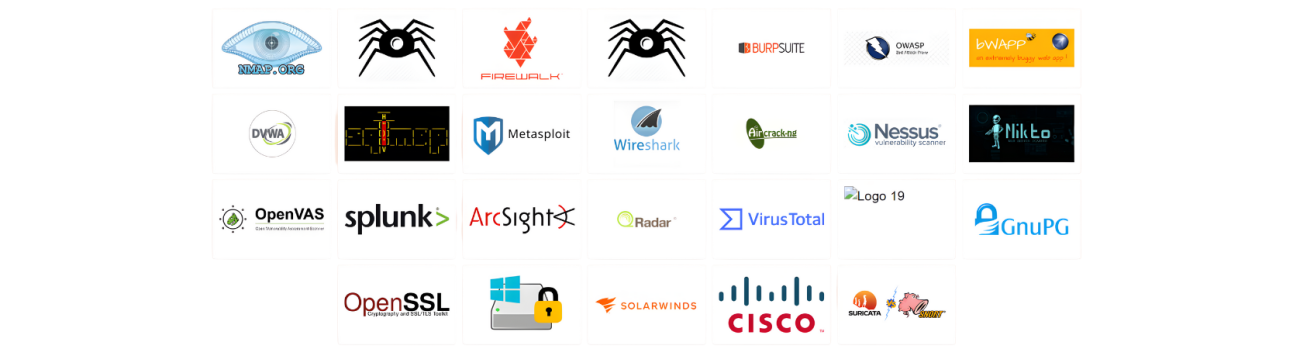
Advanced Cybersecurity and Threat Management Certification Tools Covered
Advanced Cybersecurity and Threat Management Certification Program Benefits

Comprehensive Curriculum

Gain in-depth knowledge from foundational cybersecurity concepts to advanced threat management, incident response, and governance frameworks like ISO 27001 and MITRE ATT&CK.

Hands-On Training

Practical exposure through real-world tools (e.g., Splunk, Nessus, Metasploit, Wireshark) and simulations like SOC setup, phishing attacks, and forensic investigations.

Industry-Relevant Skills

Learn to tackle modern cyber threats, manage compliance, and conduct risk assessments, preparing you for high-demand roles like Security Analyst, Penetration Tester, and SOC Engineer.

Career Advancement

The program aligns with industry needs, enhancing your job readiness with skills applicable across sectors, including finance, healthcare,

Capstone Projects

Realistic scenarios, such as malware analysis and network security testing, ensure you’re job-ready with practical experience.

Flexible Learning

With 450 hours split across live sessions, recorded content, and projects, it offers a structured yet adaptable learning experience.

Admission Process

The application process consists of three simple steps. An offer of admission will be made to selected candidates based on the feedback from the interview panel. The selected candidates will be notified over email and phone, and they can block their seats through the payment of the admission fee.