

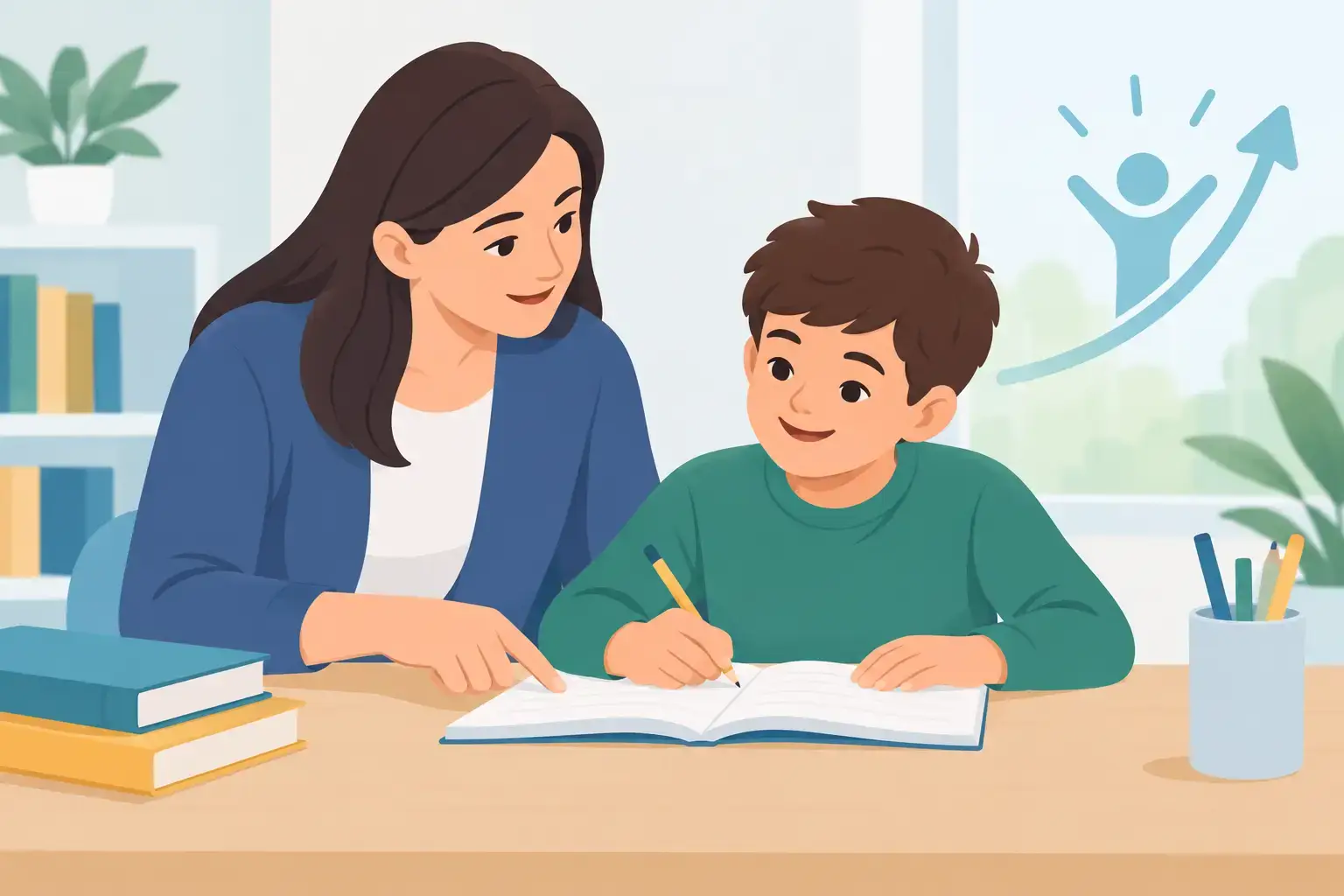
A child who needs more time to understand fractions, chemical reactions, or algebra is not incapable of succeeding. They may simply need teaching that slows down at the right moment. So, can tutoring help slow learners? Yes, when it replaces pressure and repetition without understanding with patient explanations, regular practice, and a plan that lets progress build chapter by chapter.
For many families, the concern is not only a lower test score. It is the change in a child’s attitude: avoiding homework, staying quiet in class, saying “I can’t do this,” or feeling nervous before every math or science test. The right tuition support can help a student move from confusion to familiarity, and from familiarity to confidence.
What “slow learner” often really means
The term “slow learner” can make a student feel labeled, even when adults use it with concern. In school, it usually means a child needs extra time, more examples, or repeated practice before a concept becomes clear. It does not mean the child cannot learn difficult subjects or aim for strong grades.
A student may learn slowly because an earlier chapter was not fully understood. For example, a child who struggles with linear equations may actually be unsure about integers, fractions, or basic operations. In science, difficulty with electricity may come from not understanding force, energy, or simple diagrams. When those foundation gaps remain hidden, each new lesson feels harder than it should.
Some students also need information presented differently. A fast classroom explanation may work for one child, while another needs a visual demonstration, a worked example, and the chance to pause and ask, “Why did we use this formula?” Good tutoring identifies the reason behind the struggle instead of treating every low mark as a lack of effort.
How tutoring helps slow learners make real progress
Tutoring is most effective when it is not just an extra class added to an already tiring day. It should be a focused learning space where the student can revisit a topic, make mistakes safely, and receive guidance at a pace they can manage.
It gives students the time a classroom cannot always provide
Teachers manage an entire class and a fixed syllabus schedule. Even highly supportive school teachers cannot pause for every child after every step. A tutor can spend longer on the exact point of confusion, whether it is reading a word problem, balancing an equation, or remembering a method for solving a geometry question.
This individual attention matters because students who learn at a slower pace often need smaller learning steps. Rather than moving from a rule straight to a difficult exercise, they may need to see the rule, try a simple problem, explain the answer aloud, and then attempt a slightly harder question. Small wins create the confidence needed to keep trying.
It rebuilds the basics without embarrassment
A child in Grade 8 may need support with a Grade 6 concept. In a crowded setting, asking for that help can feel embarrassing. Personalized tuition gives students permission to go back, revise, and practice without being compared to classmates.
This is especially valuable in CBSE mathematics and science, where chapters build on one another. Once foundational concepts are strengthened, a student often begins to understand current lessons more quickly. Progress may not look dramatic in the first week, but a steady improvement in accuracy, participation, and willingness to attempt questions is meaningful.
It turns passive watching into active learning
Watching a video or listening to an explanation is useful, but it is only the first step. Slow learners usually need guided practice to confirm that they understand. A strong tuition program combines clear teaching with questions, worksheets, chapter tests, and feedback.
When a child gets an answer wrong, the tutor should help identify what happened. Was the question misunderstood? Was a formula forgotten? Did the student rush the calculation? This kind of feedback is more helpful than simply being told to practice harder. It teaches a student how to learn, not only what to memorize.
It creates a routine that reduces last-minute panic
Students who find subjects difficult often postpone them. The more they avoid a chapter, the larger it feels. Regular tuition can establish a manageable rhythm: learn a small concept, revise it, complete a few questions, clear doubts, and test understanding.
A consistent schedule is particularly helpful before school exams. Instead of trying to cover an entire textbook in a weekend, the student has already revised key chapters and identified weak areas. Mock tests and home tests then become practice opportunities, not proof that they are failing.
Why replayable digital tuition can be a good fit
For students who need more time, the ability to replay a lesson can be as valuable as live teaching. In a traditional tuition center, an explanation happens once. If the child is distracted, shy, or still processing the first step, the class moves on.
With digital tuition, students can pause an animated lesson, replay a difficult section, and review notes before trying questions. They can return to the same explanation before a test instead of relying only on memory. This creates a calmer learning experience for students who need repetition.
Live classes still matter because they bring structure and interaction. The best balance is often live guidance combined with recorded lessons, practice questions, and a simple way to ask doubts. OurOwn’s chapter-based approach, including daily live classes, replayable learning videos, tests, notes, and doubt support, is designed around this kind of steady academic progress.
Digital learning is not automatically the best answer for every child, however. A student who is easily distracted may need a parent-supported study routine, a quiet place to learn, and clear screen-time boundaries. Technology helps when it is paired with accountability, not when it becomes another source of distraction.
What parents should look for in tutoring support
The right tutor or platform should make learning clearer, not merely assign more work. Parents can look for a program that teaches according to the child’s school syllabus, revisits weak foundations, and checks progress regularly.
It also helps when parents can see what the student is studying and where they need support. A child may say, “I studied,” but chapter tests, practice performance, and teacher feedback provide a more complete picture. This allows parents to encourage effort without turning every evening into an argument about marks.
Before choosing tuition, ask whether the teaching style fits your child. Does the program explain concepts step by step? Can lessons be repeated? Are doubts answered? Is there enough practice before tests? Does the child feel comfortable admitting they do not understand? These questions matter more than promises of instant improvement.
Progress is usually gradual, not immediate
Tutoring can help slow learners, but it is not a magic fix. A child who has struggled for months may need several weeks of consistent support before scores rise noticeably. Early signs of success can be quieter: completing homework with less help, asking better questions, answering one problem correctly after several attempts, or feeling less anxious about school.
Parents can support this process by praising effort, consistency, and improvement rather than comparing the child with siblings or classmates. Saying, “You understood this step better than last week,” encourages growth. Saying, “Why are you still behind?” can make a child afraid to try.
The goal is not to rush a student into someone else’s pace. It is to give them enough clarity, practice, and encouragement to find their own momentum. With patient tutoring and a regular study plan, a learner who once avoided math or science can begin to see difficult chapters as challenges they are capable of solving.